REVIEW · HERAKLION
Cretan Stories – A Journey Through History and Tradition
Book on Viator →Operated by Checkin Creta Travel · Bookable on Viator
One full day, and you’ll feel Crete’s story. This tour strings together Monastery of Arkadi history, Margarites pottery culture, and a working ceramics visit in one smooth route. You also get short museum and cave stops that keep it from turning into a pure bus ride.
I like the way the guide frames what you’re about to see—especially at Arkadi, where you’re given the background before you wander the stone paths and rooms. I also really like the hands-on feel of the ceramics stop, with live demonstrations from the workshop owner, Mrs Helen.
One drawback to plan for: several key sites have extra entrance fees, including Arkadi, the Eleftherna museum, and Melidoni Cave (listed as €13 per person). If you’re watching your total budget tightly, that’s the part to factor in.
In This Review
- Key highlights worth your attention
- First stop: Monastery of Arkadi and the Cretan revolution backdrop
- Ancient Eleftherna in 40 minutes: religion and daily life over 3,000 years
- Margarites village: the pottery town that turns craft into culture
- Melidoni Cave: an atmospheric revolution site, with a nature-management caveat
- Tsikalario Cretan ceramics with Mrs Helen: the clay-to-object payoff
- Price and value: $36.05 plus about €13 in entrances
- Pickup logistics you can actually handle
- How to make the day feel smooth (not rushed)
- Who this tour is best for (and who should skip it)
- Should you book Cretan Stories in Rethymno country?
- FAQ
- How long is the Cretan Stories tour?
- What’s the price per person?
- Is pickup and drop-off included?
- Which sites have entrance fees?
- Do I need cash for tickets?
- Is this tour in English?
- Do I get a mobile ticket?
- How big are the groups?
- What’s the cancellation window?
- Where do I meet the driver for pickup?
Key highlights worth your attention

- Arc-shaped storyline in one day: Cretan revolution sites plus ancient life plus everyday craft culture.
- Arkadi with context first: the guide explains history during the bus ride, then you explore on your own.
- Margarites pottery village time: a proper stroll and time to eat at local tavernas.
- Melidoni Cave as a revolution stop: an atmospheric cave visit with an extra entrance fee.
- Tsikalario ceramics workshop with Mrs Helen: clay to object, shown live in a working studio.
- Pickup over a wide area: you can get on the bus from many western Crete towns.
First stop: Monastery of Arkadi and the Cretan revolution backdrop
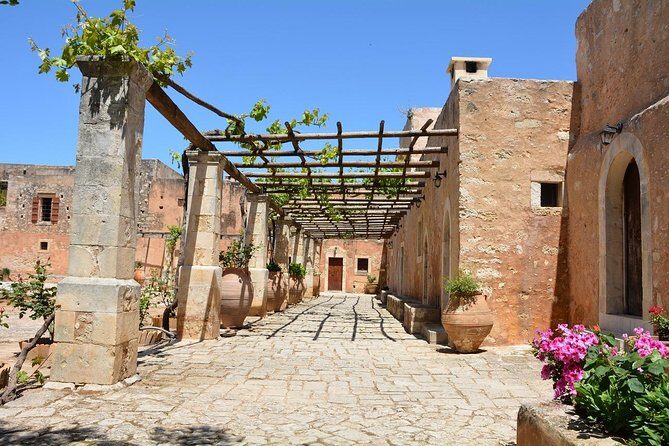
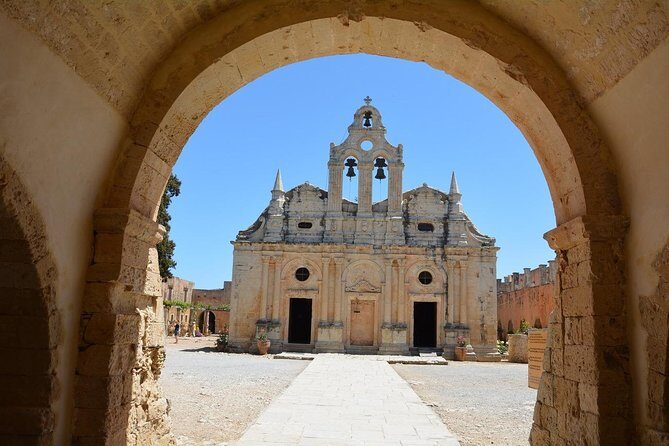
Arkadi is the emotional anchor of this day. Even if you’re not the type who loves speeches, this place hits because it was tied to the Cretan revolution, and the tour doesn’t just dump you at the gates. You get history explained on the bus first, so when you arrive, you know what you’re looking at.
The monastery visit runs about an hour. You’ll have free time to walk the small stone paths, visit the rooms, and get to the big room connected with the explosion event tied to the revolution. That self-paced time matters—Arkadi works better when you can slow down, stand still, and take in the space instead of rushing through.
Budget note: the Arkadi admission ticket isn’t included. You’ll want to plan for that extra cost early, because it sets the tone for how much you’ll pay across the day. The good news is that everything else is either short and included or clearly marked for separate fees.
Other historical tours in Heraklion


Ancient Eleftherna in 40 minutes: religion and daily life over 3,000 years
Next comes Archea Eleftherna, described as covering ancient and religious life from roughly 3000 BC until around 1300 AD. That’s a huge time span, so you have to think of this stop as a guided “orientation” rather than a deep, multi-hour museum day.
You’ll spend about 40 minutes here. The good part is that the admission ticket is listed as free, so you’re not stuck doing math in the gift shop. The better part is how the visit complements Arkadi. Where Arkadi is about revolution-era memory, Eleftherna is about long-lived local life and worship—two very different kinds of history, both tied to place.
The caution: because the stop is relatively short, you’ll get more from it if you keep your expectations simple. Treat it like a fast sketch of ancient Crete, and you won’t feel rushed. If you’re the kind of traveler who wants to read every label, you may wish you had more time.
Margarites village: the pottery town that turns craft into culture
Then you head to Margarites, a village known for pottery. This is one of the best “change of pace” moments on the tour because it’s not just staring at artifacts behind glass. You’re walking a real village tied to a craft that still matters.
You’ll have about two hours in Margarites. The schedule includes time to walk the traditional village and—importantly—free time to eat lunch at local small tavernas if you want. That open lunch time is smart, because it lets you pick food based on your hunger and spice tolerance rather than whatever the group package dictates.
What makes this stop valuable is the connection between the village and the later workshop. When you see the pottery culture first, the ceramics demonstration later makes more sense. You’re not just watching someone make things; you’re seeing how the tradition grew into something practical and repeatable.
If you’re sensitive to long walking stretches, you can still take it at your pace. The village time is designed to be flexible, not a relentless checklist.
Melidoni Cave: an atmospheric revolution site, with a nature-management caveat
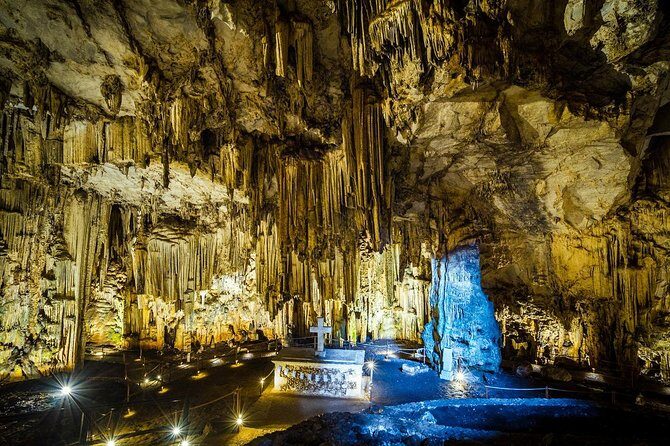
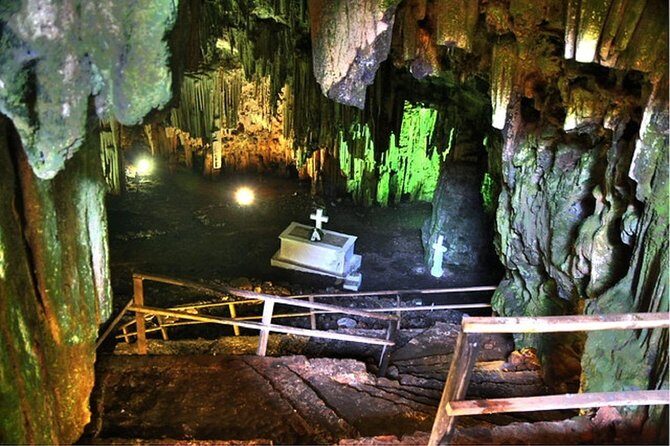
After the village, the tour moves into Melidoni Cave. This stop is tied to the Cretan revolution during the Turkish occupation, which gives the cave a political layer—not just geology and shadowy tourism.
Plan on about 40 minutes. The admission ticket for Melidoni Cave isn’t included, so again, treat extra fees as part of the deal.
One thing to keep in mind: caves can feel like nature, but they’re also managed spaces. You may notice that parts of the cave have been altered for access, including changes to stalactites. If you strongly prefer untouched nature, this could feel like a compromise. If you can accept cave management as the tradeoff for safety and visitor access, the cave visit can still be memorable.
Either way, this stop works best when you don’t try to compare it to a totally untouched landscape. Think of it as an experience with history layered onto a guided environment.
Tsikalario Cretan ceramics with Mrs Helen: the clay-to-object payoff
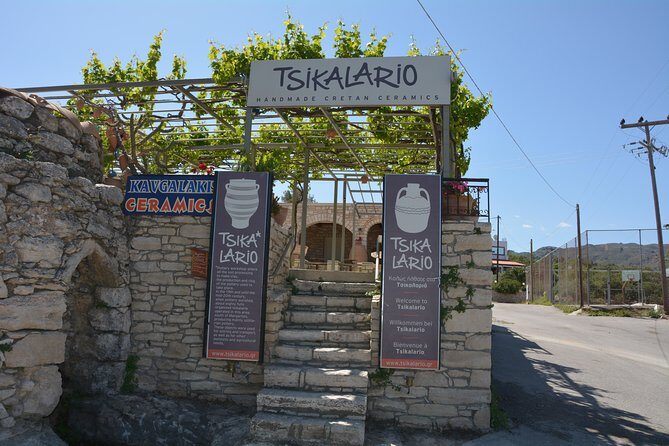
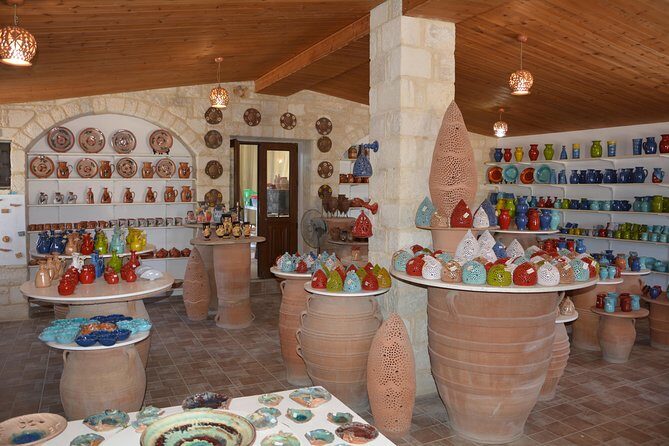
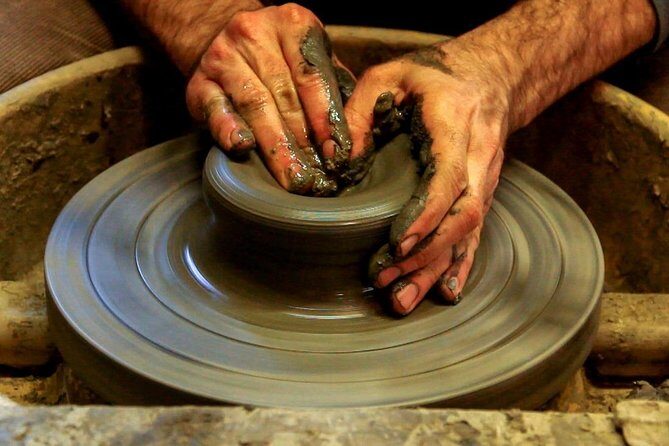
Back near Margarites you’ll visit Tsikalario Cretan ceramics, a working pottery workshop. This isn’t positioned as a “look but don’t touch” stop. Instead, the owner and artist, Mrs Helen, shows you live how clay becomes an object you can use.
You’ll have about 40 minutes here. It’s the kind of stop that makes a difference because you can see the process, not just the result. Even if you can’t picture pottery from scratch, watching someone work helps you understand why different shapes and finishes exist—and why this craft is worth keeping alive.
This is also where the day’s theme clicks: revolution history earlier, ancient life nearby, and then hands-on tradition. The workshop gives the human side of Crete. It turns history into something you can almost feel with your eyes.
Budget-wise, this stop is listed as having free admission. So you get a higher “value per minute” moment, especially compared to sites where you pay extra.






Price and value: $36.05 plus about €13 in entrances
This tour lists at $36.05 per person, runs around 8 to 9 hours, and includes an air-conditioned vehicle plus pickup and drop-off across several towns. On top of that, your main added cost is entrance fees for Arkadi, the Eleftherna museum, and Melidoni Cave, listed together as €13 per person.
So what’s the real value? You’re paying for a full-day route that would take effort to stitch together yourself: multiple historic and craft stops in one day, with transport between them and a guide giving context. If you’ve ever tried to string together monasteries, caves, and pottery villages by bus, you know how quickly the day turns into transfers and uncertainty. Here, you skip most of that stress.
Also, the group size is capped at 50 travelers, and that usually helps keep things organized without turning into a tiny parade. Not everyone will love every stop, but you’re not stuck in a chaotic crowd scene.
One more “value” angle: this tour tends to be booked fairly in advance, with an average booking lead time of 51 days. If you’re traveling in peak season or around holidays, you’ll want to lock it in earlier rather than trusting luck.
Pickup logistics you can actually handle
This is one of those tours where pickup matters because the route is spread out. The included pickup and drop-off cover Bali, Panormo, Skaleta, Adele, Platanias, Missiria, Rethymno town, Atsipopoulo, Kavros, and Georgioupoli, with hotel-area pickup.
The practical tip is simple: wait outside your hotel reception about 10 minutes before the appointment time. It keeps you from getting left behind and keeps your morning calm.
You’ll also get a mobile ticket, which is convenient. Since the tour is offered in English, it’s a good fit if you want clear explanations and aren’t counting on translation apps.
How to make the day feel smooth (not rushed)
This itinerary is structured as a series of short “chapters.” Arkadi takes about an hour, Eleftherna about 40 minutes, Margarites about two hours, Melidoni about 40 minutes, and the workshop about 40 minutes. That means you’ll be moving on and off the bus several times, but the stops are varied enough that the day usually doesn’t feel monotone.
To get the best experience:
- Use Margarites for lunch and a slow reset. Two hours is your main flexible block.
- Bring cash or a card for entrances, because three major sites require extra payment.
- Wear shoes that handle stone paths. Arkadi includes small stone paths, and caves mean some uneven footing.
- If you care about nature details, go into Melidoni with realistic expectations about cave access and management.
Who this tour is best for (and who should skip it)
You’ll love this tour if you want a single history-and-crafts day that doesn’t require planning five separate trips. It’s a strong choice for first-time visitors to the Rethymno area who want context: revolution history, ancient life, and then living traditions through pottery.
It’s also a good match if you enjoy museums but prefer a day that includes something tactile or visual. The ceramics workshop with Mrs Helen is the kind of stop that gives you that “I get it now” feeling.
You might be less thrilled if you:
- hate paying extra for entrances (because €13 per person is part of the deal),
- want lots of time in one single museum,
- or are very sensitive to how tourist access can change a natural site.
Should you book Cretan Stories in Rethymno country?
I’d book it if you want a well-rounded day with transport handled for you. The combination of Arkadi’s revolution story, Eleftherna’s ancient timeline, and the working ceramics workshop in Tsikalario makes the day feel like more than a checklist.
If you’re the type who only wants one or two “major” sights and lots of free time at each, then you may prefer a less stop-heavy plan. But for most people—especially those who don’t want the stress of arranging separate rides—this is a solid value way to understand Crete beyond the postcard.
FAQ
How long is the Cretan Stories tour?
It runs about 8 to 9 hours.
What’s the price per person?
The listed price is $36.05 per person.
Is pickup and drop-off included?
Yes. Pickup and drop-off are included from multiple towns, including Bali, Panormo, Skaleta, Adele, Platanias, Missiria, Rethymno town, Atsipopoulo, Kavros, and Georgioupoli.
Which sites have entrance fees?
Arkadi, the Eleftherna museum, and Melidoni Cave have entrance fees listed as €13 per person total. Admission for the other stops is listed as free.
Do I need cash for tickets?
You may need to pay entrance fees for the sites where they are not included, since those tickets are not listed as part of the tour price.
Is this tour in English?
Yes, the tour is offered in English.
Do I get a mobile ticket?
Yes, mobile tickets are provided.
How big are the groups?
The tour has a maximum of 50 travelers.
What’s the cancellation window?
Free cancellation is offered. You can cancel up to 24 hours in advance for a full refund.
Where do I meet the driver for pickup?
You wait outside your hotel reception about 10 minutes before the appointment time.
If you want, tell me where you’re staying (nearest town to your hotel) and your travel month, and I’ll suggest the best way to time meals and entrance fees for this day.