REVIEW · HERAKLION
Heraklion: Knossos Palace Guided Tour Half Day
Book on GetYourGuide →Operated by Mykonos Excursions · Bookable on GetYourGuide
Knossos turns myths into walkable rooms. This half-day guided visit takes you into the Palace of Knossos and explains why it mattered to the world of King Minos. I love how the guide frames what you’re seeing with a clear timeline, from the palace’s main build period to the later discoveries that shaped today’s ruins.
I also like the guide storytelling touch. In one booking, the guide (Sacarías) used a book with reconstructions to help you picture what the palace looked like in its height. That kind of visual support matters at Knossos, where the layout can feel confusing at first.
One thing to watch: you’ll likely pay extra for archaeological site entrance fees, and the total on-site time can be tight. If you’re trying to match a precise schedule, I’d double-check the guided portion length shown on your voucher, since one earlier booking noted a shorter on-site guide time than expected.
In This Review
- Key Knossos tour highlights you’ll actually feel
- Meeting at Heraklion’s museum area, then riding to Knossos
- Entering the Palace of Knossos: 1700–1400 BC and up to five stories
- The palace maze in 2 hours: 1300 rooms, corridors, and a theater
- Storerooms and the Minoan supply chain: oil, grain, dried fish, olives
- Minos legends meet excavation history: 1878 discovery and Arthur Evans’ work
- Timing reality check: 08:30 start, guided time, and return at 11:30
- Price and value: what $70 includes, and what will cost extra
- Language options: choose your comfort, not just your schedule
- Who should book (and who shouldn’t)
- Booking check: should you take this half-day Knossos tour?
- FAQ
- Where is the meeting point for the Knossos tour?
- What time does the tour start and when do you return?
- How long is the guided visit at Knossos?
- Is the site entrance fee included?
- What does the price include?
- What languages are available for the live guide?
- Is the tour suitable for mobility impairments and unaccompanied minors?
Key Knossos tour highlights you’ll actually feel
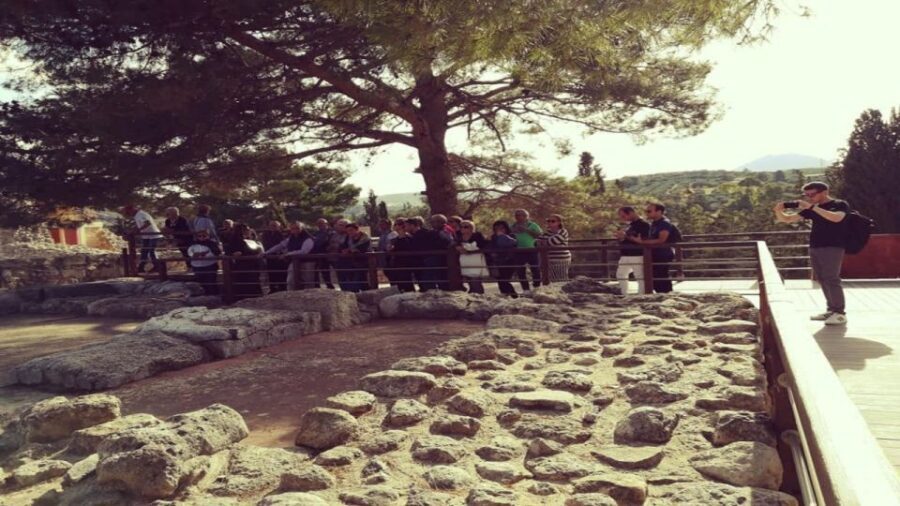
- Palace basics in context: built mainly 1700–1400 BC, with advanced construction and ruins up to 5 stories high in places
- It’s not just one era: settlement traces go back to the Neolithic period (around 7000 BC)
- The palace scale is wild: 1300 rooms linked by corridors, plus a theater and big storerooms
- Food + power in storerooms: containers for oil, grain, dried fish, beans, and olives (with gold hidden in the stories)
- Legend meets excavation: connected to Minos legends, discovered in 1878 and excavated by Sir Arthur Evans starting in 1900 for 35 years
- High guide value: guided by a professional with multiple language options (English, Spanish, Italian, French)
Meeting at Heraklion’s museum area, then riding to Knossos
You start near the Heraklion Archaeological Museum, at Hari’s Creperie. The meeting point is directly across from the museum entrance area, in front of Hari’s Creperie in Heraklion. You meet the guide at 08:30, then you’ll take an air-conditioned motorcoach/van to Knossos.
That drive is short—about 30 minutes—and that’s a big reason this works as a half-day. You’re not spending your whole morning on transit. You also get there while the day is still fresh, which helps if you’re the type who likes to see ruins with clear focus instead of post-breakfast fog.
The ride itself is straightforward: it’s a quick hop of around 5 km southeast off the city to the palace site area. After the guided visit, you’ll return to the same meeting point, arriving back at 11:30.
Other Knossos Palace tours we've reviewed in Heraklion

Entering the Palace of Knossos: 1700–1400 BC and up to five stories
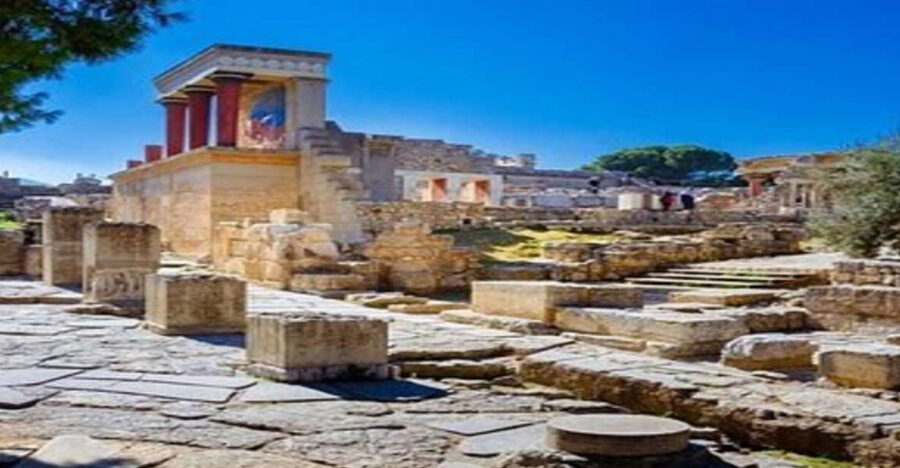
The guide’s job is to make the palace readable. Knossos is famous, but it’s also easy to feel overwhelmed because you’re looking at a sprawling ruin complex, not a single temple on a hill with a neat signboard explanation.
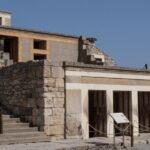
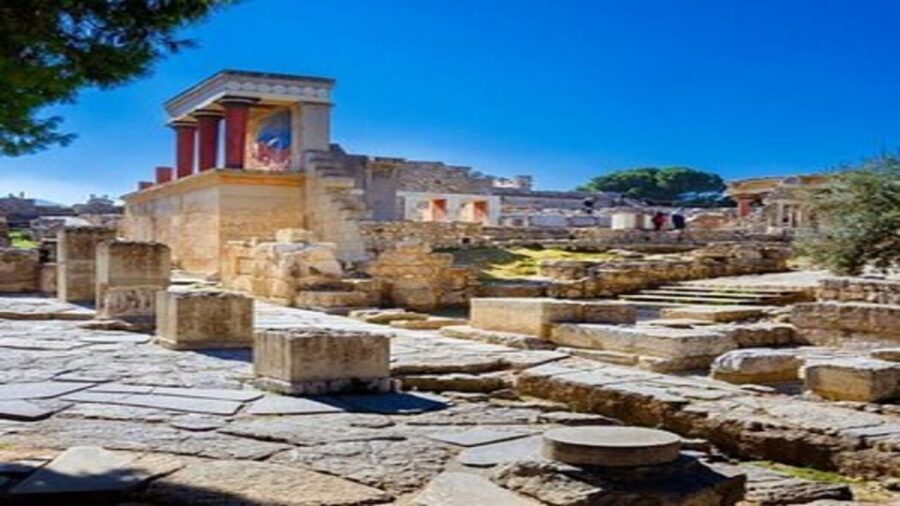
What you’ll anchor to is the palace’s main build period: 1700 to 1400 BC. The tour explains that advanced architectural techniques were used, and that parts of the structure could rise up to five stories high. Even if you can’t picture that height while you’re standing in the ruins, hearing the claim—and then learning how different palace areas were used—helps you see the scale in a more practical way.
Here’s what I think you’ll appreciate most: the guide doesn’t just name features. The tour approach is to connect rooms and spaces to Minoan life—who used what, why certain areas existed, and how the palace worked as a center rather than a single residence.
You’ll also get early context before the palace really takes over the story. The settlements at Knossos reach back to the Neolithic period, with remains dated around 7000 BC found across Crete. That background helps you understand why Knossos is more than one “snapshot” of Minoan culture—it’s a long-running human site that later became a palace hub.
The palace maze in 2 hours: 1300 rooms, corridors, and a theater
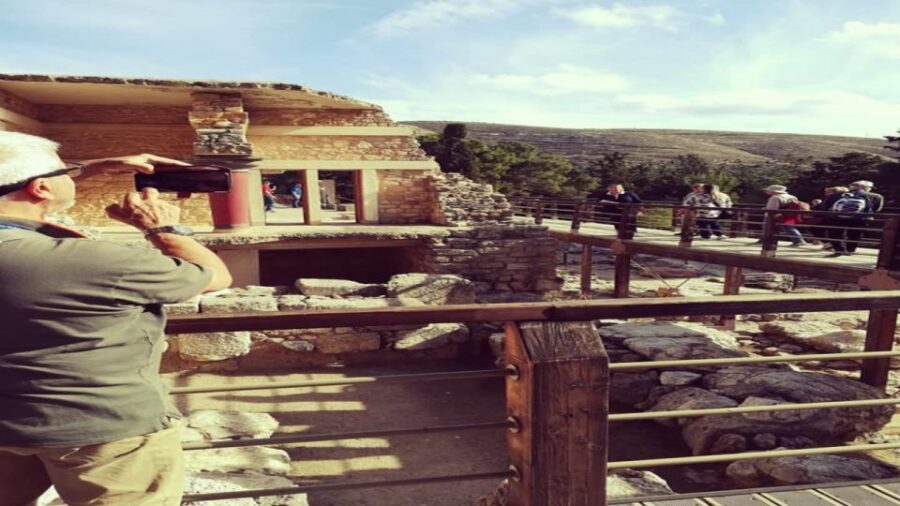
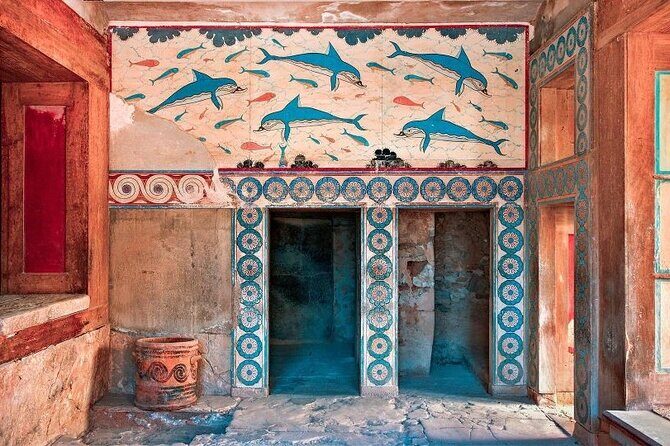
Knossos is often summarized as a palace, but on the ground it behaves more like a connected world. One of the clearest tour facts is the scale: the palace has been described as having 1300 rooms connected by corridors, plus a theater.
During the guided portion (listed as 2 hours), you’ll walk through the key areas the guide uses to explain how the palace functioned. That matters because Knossos isn’t laid out like a modern attraction with a simple one-way route. Corridors and room clusters can blur together fast, especially if you’re trying to read every wall and inscription like a detective. The guide’s route and explanations help you avoid that spiral.
The theater is a good example of why this is worth doing with a guide. It’s not just a “wow, look at this.” It’s a clue that Knossos had social and possibly ceremonial gathering space, not only storage and administration.
Practical note: the tour is not suitable for people with mobility impairments. That’s stated clearly, and it’s also consistent with how you’ll be moving around uneven ruin surfaces and dealing with steps or ground variations.
Storerooms and the Minoan supply chain: oil, grain, dried fish, olives
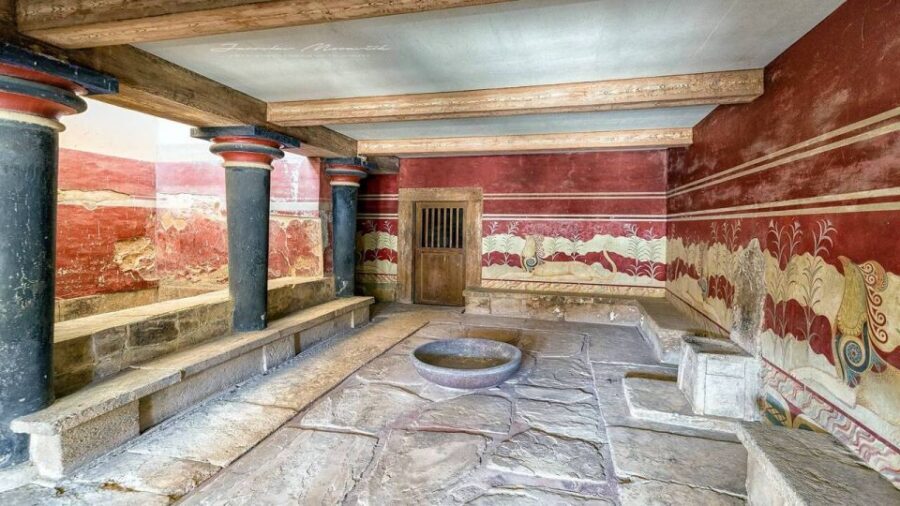
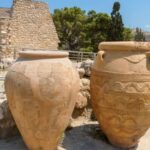
One of Knossos’s most useful lessons is that a palace is also an economic machine. The tour highlights the palace’s extensive storerooms, including large clay containers used for staples such as oil, grains, dried fish, beans, and olives.
That list sounds like trivia until you connect it to the big idea: what a society stores tells you what it grows, trades, and values. If you leave Knossos thinking only of legends, you’ll miss the quieter truth the palace can teach: food movement and storage were a big part of power.
The tour also brings in the legend-flavored detail that gold could be hidden beneath storerooms or associated with the hiding of valuables. Even if you treat that piece as story rather than literal fact, it still helps explain why the palace has such a mythic reputation.
And this is where the guide’s style really shows. In one Spanish-language experience, Sacarías was praised for explaining details and using reconstructions. When you’re standing in ruins, a quick reconstruction can make these storerooms feel less abstract.
Minos legends meet excavation history: 1878 discovery and Arthur Evans’ work
Knossos has always been a magnet for legends, and the tour leans into that connection. You’ll hear how Knossos was associated with the legendary king Minos, and how the palace connects with thrilling stories that kept people fascinated long after the Minoans disappeared.
But the experience also grounds you in the archaeology side—the part that helps you trust what you see and what you’re told about it. The site was discovered in 1878 by Minos Kalokairinos. Then excavations began in 1900 with Sir Arthur Evans and his team, continuing for 35 years.
Why does that matter for you, right now, standing among the ruins? Because Knossos isn’t simply “ancient stones.” It’s a site shaped by excavation choices, interpretations, and restoration ideas. When a guide mentions Evans’ decades of work, you understand why some parts of what you see may feel reconstructed or explained with confidence.
If you prefer history that’s not just dates but also “how we know,” this portion is key. It gives you a mental model: people found and studied Knossos over a long period, and the modern understanding is a result of those efforts.
Other guided tours in Heraklion


Timing reality check: 08:30 start, guided time, and return at 11:30
The day is built around a tight rhythm:
- Meet and depart at 08:30
- Drive about 30 minutes
- Guided time at Knossos (listed as 2 hours)
- Return drive about 30 minutes
- Back at the meeting point at 11:30
For a half-day tour, it’s a solid structure. It gives enough time to learn the basics—timeline, room use, legends, and the major archaeological milestones—without turning into an all-day endurance contest.
But here’s the honest caution: one earlier booking reported that the guided portion on-site felt closer to 1.5 hours rather than the full 2 hours shown in the general description, and the guide referenced a shorter duration. I can’t tell you that will happen every time. Still, if you’re on a tight itinerary, it’s smart to confirm the exact guided portion length in your booking details before you assume it will always match the overview.
Price and value: what $70 includes, and what will cost extra
The price is listed at $70 per person for a 3-hour experience. That number can feel more or less fair depending on what’s included.
Here’s the value breakdown:
- Included: air-conditioned motorcoach, professional guide, and VAT and legal taxes
- Not included: entrance fees to the archaeological site and any pick-up/drop-off transfer
So you’re paying mainly for access to a guided framework plus transport comfort, not for museum-style admission. For Knossos, that means your real total cost will depend on the entrance fees you’ll pay separately.
Is it good value? I think it can be, if you want the guide to connect the dots quickly—especially given Knossos’s scale (1300 rooms) and layered timeline (Neolithic roots to Minoan palace height to modern excavation history). A knowledgeable guide helps you not just see more, but understand more in less time.
Also, the tour carries a high overall rating of 4.9 based on 5 reviews, which suggests the service quality is consistently strong—particularly the guide explanation and language delivery (one praised Spanish guidance by Sacarías).
Language options: choose your comfort, not just your schedule
The tour offers live guide narration in English, Spanish, Italian, and French. That’s a big practical point. Knossos is concept-heavy: legends, room functions, and excavation history. Doing that in a language you’re comfortable with will make the 2-hour guided portion feel far less rushed.
If you’re selecting between languages, I’d pick the one that lets you ask yourself questions as you walk—Why would that room exist? What did storerooms do for daily life? How did Evans’ excavation shape what we see?
Who should book (and who shouldn’t)
This tour fits best if you want a focused Knossos visit without doing the planning grind yourself. It’s ideal for:
- First-timers to Knossos who want a clear story of what the palace was and why it mattered
- People interested in Minoan culture through practical clues (storage, supply, social spaces like a theater)
- Travelers who care about legends, but also want real excavation context (Kalokairinos in 1878, Evans in 1900 for 35 years)
- Anyone who benefits from guided help organizing a complex site fast
It’s not suitable for people with mobility impairments, and unaccompanied minors aren’t allowed. If you fall into either of those categories, you’ll need a different format.
If you’re traveling with limited time in Heraklion, this also gives you a satisfying hit: depart early, learn deeply for a short window, and still be back in the city by late morning at 11:30.
Booking check: should you take this half-day Knossos tour?
If your goal is to understand Knossos—not just photograph it—this is a strong booking choice. You’re getting transport, a professional guide, and a guided story that connects palace scale, daily life, legends of Minos, and the excavation trail from 1878 to 35 years of work starting in 1900.
Before you book, do these three practical checks:
- Confirm the entrance fees requirement so the final budget doesn’t surprise you
- If your schedule is tight, double-check the exact guided duration shown in your booking details
- Wear comfortable shoes; Knossos is a ruin site, and you’ll want stability and comfort for walking
If that matches your travel style, I’d book this half-day tour. It’s short enough to fit real itineraries, but structured enough to leave you with a clear mental picture of what Knossos was trying to do.
FAQ
Where is the meeting point for the Knossos tour?
You meet across from the entrance of the Heraklion Archaeological Museum, in front of Hari’s Creperie, Heraklion.
What time does the tour start and when do you return?
You meet at 08:30 and return to the meeting point at 11:30.
How long is the guided visit at Knossos?
The total tour time is listed as 3 hours, with a guided tour at Knossos of about 2 hours.
Is the site entrance fee included?
No. Entrance fees to the archaeological site are not included.
What does the price include?
The price includes an air-conditioned motorcoach, a professional guide, and VAT and all legal taxes.
What languages are available for the live guide?
The live tour guide is available in English, Spanish, Italian, and French.
Is the tour suitable for mobility impairments and unaccompanied minors?
It is not suitable for people with mobility impairments, and unaccompanied minors are not allowed.