REVIEW · HERAKLION
Private Tour Knossos & Heraklion City
Book on Viator →Operated by CreteCab · Bookable on Viator
Knossos and Heraklion, without the hassle. This private outing pairs Knossos Palace time with a smart walk-through of Heraklion’s Venetian-era landmarks, so you’re not just collecting stops, you’re building a clear picture of Crete in one go. I especially like the round-trip private transfers that save you from transit stress, and I also like how the pacing is built around a few meaningful moments instead of rushing past everything.
One thing to consider: this is private transportation with driver information, not a guaranteed licensed museum-guide included for every interior site. For places like Knossos, you may need an official guide on-site to go deeper inside the complex.
In This Review
- Key Things to Know Before You Go
- Private Knossos and Heraklion: what you’re really paying for
- Knossos Palace in 90 minutes: what to focus on
- Heraklion from the Venetian Walls to Kazantzakis’ tomb
- St. Minas, St. Ekaterini icons, and the feeling of rebuilding after damage
- Morosini Fountain and the Venetian civil-life contrast
- The Loggia and Koules: seeing government and defense in the same day
- Price and logistics: value, entrances, and the guide question
- Who this tour suits best (and who should look elsewhere)
- Should you book this private Knossos & Heraklion tour?
- FAQ
- Are entrance tickets included for Knossos and other stops?
- Will the driver accompany us inside the sites?
- What’s included in the tour?
- Where and how does pickup work?
- How long is the tour?
- Can I cancel and get a full refund?
Key Things to Know Before You Go
- Private vehicle for up to 8 with bottled water, WiFi, and A/C for a smoother half-day (or long half-day).
- Knossos in about 90 minutes, timed to see major highlights like the Great Palace and Caravan Serai.
- Venetian Candia sights including the Tomb of Nikos Kazantzakis and classic city-wall viewpoints.
- Church-and-art stops around St. Minas, St. Ekaterini icons, and the Basilica of St. Mark area.
- Koules Fortress at the harbor, for a strong sense of how Heraklion guarded its coastline.
- Plan for a licensed guide if you want museum-level detail, since the driver can’t go inside sites.
Private Knossos and Heraklion: what you’re really paying for
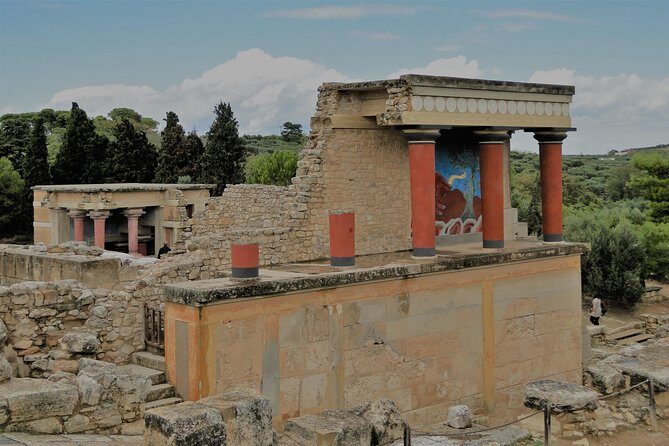
This tour works best when you want two things at once: Minoan big-picture context and a real feel for modern Heraklion’s older layers. The price is per group (up to 8), so it’s most comfortable when you split it between a few people. With $392.77 for the group, the cost per person drops a lot as headcount goes up, especially if you’d otherwise pay for separate taxis and entrance tickets.
The other reason the price makes sense is the time-saving value. You’re not wasting energy figuring out routes or parking in a busy city. You get an air-conditioned vehicle, bottled water, and WiFi on board, which sounds minor until you’re riding out to Knossos and back with a clear plan for your stops.
The private part matters too. With a driver who can coordinate timing and keep you moving, you spend your energy on what you came for—rather than watching the clock while public transport or shared group schedules do their thing.
Other Knossos Palace tours we've reviewed in Heraklion
Knossos Palace in 90 minutes: what to focus on
Knossos is one of those places where it’s easy to feel overwhelmed fast. You can solve that by choosing a few anchor areas and letting everything else orbit them. In a roughly 1 hour 30 minutes visit, this tour targets the most recognizable “centers” of the palace world.
Here’s how to think about what you’ll see:
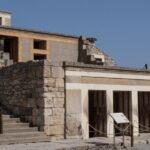
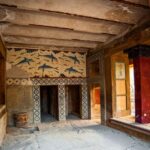
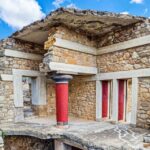
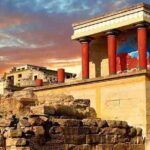
- The Great Palace: This is the core—royal quarters, workshops, shrines, storerooms, and the spaces tied to ceremonial life. If you like power, administration, and everyday craft all mixed together, this is the heart of Knossos.
- Royal quarters and key rooms: You’ll get a sense of where authority and ritual likely overlapped, which helps explain why Knossos keeps drawing people in.
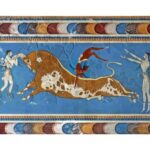
- The Little Palace and the famous Bull’s Head discovery: This is an important point to know. The Bull’s Head made of steatite is linked to this area, but it’s exhibited in the museum of Knossos. So if you’re a “I want the object itself” person, plan mentally for that split between the site and what’s shown indoors.
- Caravan Serai (public baths): This is one of the most interesting “practical” stops, because it points to the movement of people and the role of bathing spaces. It helps Knossos feel like a living hub rather than just a ruin.
- House of the High Priest and Royal Temple Tomb–Sanctuary: These areas add the spiritual and political layers, even if you’re not going minute-by-minute.
A practical note for expectations: your driver can explain and point the way, but they’re not allowed to go inside premises. That means if you want the kind of deep, licensed guidance that turns stones into stories, you should be ready to add an official guide at the entrance (or in the way the site offers). Some people are pleasantly surprised by the option to hire a licensed guide right at Knossos; others feel a bit disappointed if they assumed the driver would handle the interior narration.
My advice: if Knossos is your main reason for coming, budget mentally for at least a short official guide session, so you can ask questions and connect myths, symbols, and architecture without guesswork.
Heraklion from the Venetian Walls to Kazantzakis’ tomb
After Knossos, the mood shifts—from ancient palace scale to city scale. Heraklion’s Venetian past shows up in a very tangible way around the walls and the harbor districts. This part of the day gives you a quick but meaningful orientation: you’re learning how the city looked when it was protected, fortified, and still called Candia by the Venetians.
At the Venetian Walls area, you get time outdoors around the fortifications. Two surviving gates mentioned here—Chania and Kainouria—help you understand that these weren’t just decorations; they were real entry points that shaped movement and control.
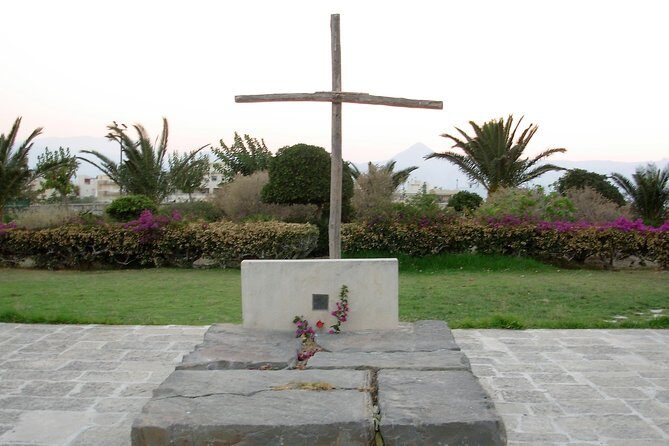
Then there’s the Tomb of Nikos Kazantzakis at the southwestern corner. Kazantzakis (1883–1947) is a major Greek writer, known for works like Zorba the Greek and The Last Temptation of Christ. Even if literature isn’t your main hobby, the tomb area earns its place because it pairs a cultural figure with a panoramic view over the city center and toward the sea.
This is a great stop if you want a moment that feels like a “breather” without losing the historical thread. It’s short, but it’s the kind of view that helps the rest of your city walk make sense.
St. Minas, St. Ekaterini icons, and the feeling of rebuilding after damage
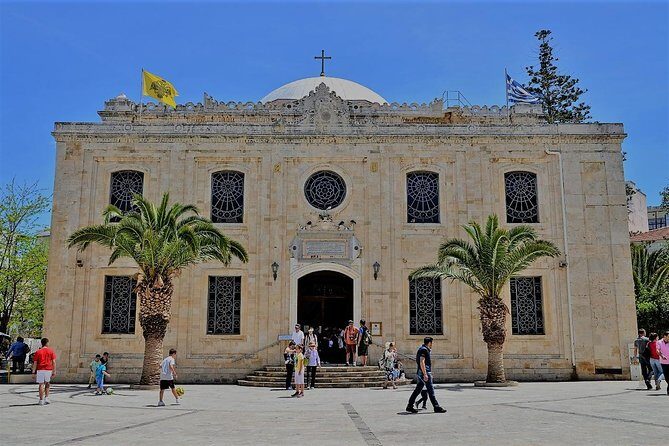
Next comes the center of religious Heraklion: the Cathedral of St. Minas, dedicated to the patron saint of the city. What makes this stop more than just a quick photo stop is the rebuild story. The cathedral suffered past battle damage, and it took 30 years to rebuild. That timeline matters because it reminds you the city keeps changing, and religious landmarks often carry the scars and the recovery.
Right next to the cathedral is a smaller and older St. Minas church, which adds a layered “then and now” feeling. And nearby is the former St. Ekaterini church, which is used to display Byzantine ecclesiastical treasures and icons. If you care about how faith, art, and identity traveled through time on Crete, this is one of the better ways to make those connections without needing an extra museum day.
Plan your mindset: this is about observing transitions—new buildings after destruction, older structures beside newer ones, and religious art presented in a way that lets you slow down for a few minutes.
Morosini Fountain and the Venetian civil-life contrast
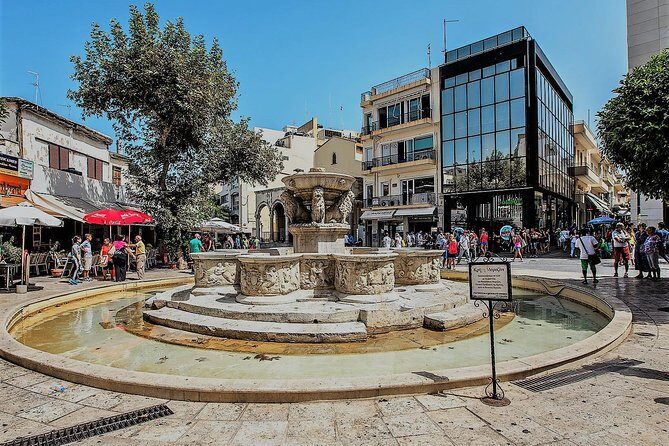
A quick wander around Morosini Fountain, also called the Four Lion Square, shows how Venetian-era infrastructure blends into daily life. The fountain was built during the Venetian era to cover the city’s needs—so it isn’t just an ornament. It’s a functional piece of old-world planning that still anchors a public square.
What I like about this stop is the contrast. You’re standing next to a historic structure, but the area functions as a meeting point in modern life, with shops around you offering coffees and ice cream. That blend is exactly what makes European city centers feel real.
Across from the fountain sits the Basilica of St. Mark, a key Venetian-era building now hosting the Municipal Art Gallery. It’s described here as open to the public almost all day, every day. If you’re passing through and want something slightly different—art instead of ruins—this is a useful option that can fit inside a short window.
Other Heraklion city tours we've reviewed
The Loggia and Koules: seeing government and defense in the same day
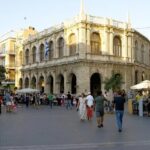
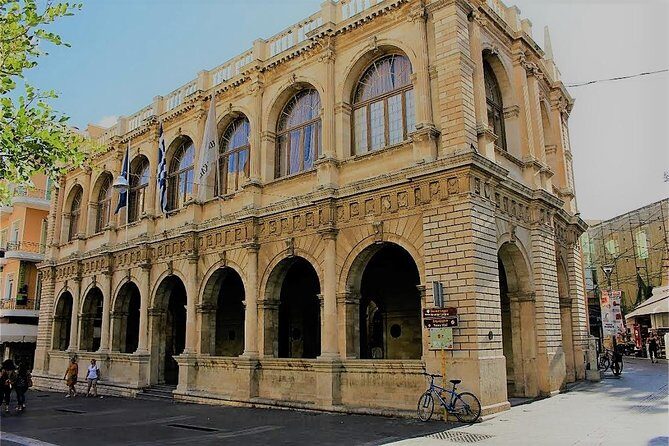
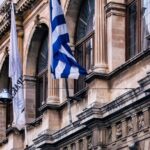
Heraklion’s civic side shows up at the Venetian Loggia, constructed under Francesco Morosini during Venetian rule. The key detail is what it became: the building now hosts the Town Hall. That’s a simple but powerful way to understand continuity. The city’s administrative center stayed important across regimes, even if the political owners changed.
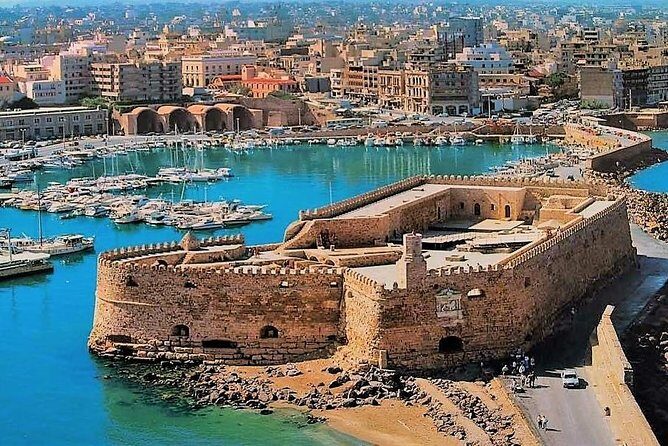
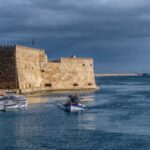
Then you finish where the city meets the sea: Castello del Molo, also known as Koules (and sometimes called Castello a Mare or Rocca a Mare). This Venetian fortress dominates the entrance of the harbor, and its main job was protection of the city. Even without a super long stop, it gives you a “why this city is shaped like it is” moment—because the harbor isn’t just pretty; it’s strategic.
If you like architecture tied to function—how a fortress location communicates threat and safety—Koules is one of the better closing points. It helps you leave Heraklion with a sense of the city’s survival logic, not only its monuments.
Price and logistics: value, entrances, and the guide question
Let’s talk money with clear eyes. You’ll pay $392.77 per group (up to 8). The tour includes private transportation, bottled water, and WiFi on board, which helps justify the group price if you’re splitting it.
But there’s a catch to value: entrance fees aren’t included. The cost listed is €20 per person where required. That means your real total depends on how many people you have and which entrance fees you end up paying.
The other cost variable is guidance. Your driver can provide information and help you understand the sights, but they cannot go inside premises. Also, a tourist guide is listed as not included unless needed. In practice, that means:
- If you want deeper museum-style interpretation inside sites like Knossos, you should expect to arrange an official licensed guide (often on-site).
- If you’re happy with a driver who explains what you’re seeing from outside and during transfers, you’ll still get a satisfying overview.
This is where some people get frustrated. If you expected a fully licensed guide walking you inside every major site as part of the base price, you might feel like you didn’t get what you mentally paid for. If you go in expecting private driving + strong orientation, and you’re ready to add an official guide where it matters, you’re more likely to feel like the day delivered real value.
If you’re traveling by cruise and you’re relying on port pickup, double-check your port entry details ahead of time. Getting the wrong port can derail the whole day even when the rest of the plan looks perfect on paper.
Who this tour suits best (and who should look elsewhere)
This private Knossos and Heraklion combo is a strong fit if you:
- Want a structured overview of Crete’s story without building a full independent itinerary.
- Are traveling with a small group up to 8 and can split the group price.
- Care about both Minoan Knossos and the later Venetian layers of Heraklion.
It may be less ideal if you:
- Only want a deep, fully guided museum experience inside major sites and expect that to be included automatically.
- Prefer lots of unstructured time wandering without a tight schedule. This tour is designed around specific stops and timing.
For couples, it can still be worthwhile because private transfers feel premium, but the per-person price will be higher than for a group of 6–8.
Should you book this private Knossos & Heraklion tour?
I’d book it if your priority is getting organized, seeing the highlights in a smooth day, and you’re open to adding an official licensed guide at Knossos if you want the richest details inside the palace complex. The structure of the day makes sense: start with the Minoan anchor, then move through Venetian and city-life highlights that help you understand modern Heraklion’s layers.
Skip it (or at least re-check expectations) if you’re treating this as a guaranteed licensed-guided day inside every interior space with no add-ons. The driver can explain and guide from the outside, but the tour is set up so you handle official interior guiding separately when required.
If you do want to make the day run perfectly, go in with two mental plans:
- At Knossos, decide early whether you want an official guide for the inside experience.
- Confirm pickup details carefully, especially if you’re coming from a port.
FAQ
Are entrance tickets included for Knossos and other stops?
No. Entrance fees are listed as not included, at €20 per person where required.
Will the driver accompany us inside the sites?
No. The drivers can provide information but are not allowed to get inside premises. For inside interpretation, you’ll need an official guide.
What’s included in the tour?
You get bottled water, an air-conditioned vehicle, private transportation, and WiFi on board.
Where and how does pickup work?
Pickup is offered, with hotel pickup and drop-off within 50 km with no extra charge.
How long is the tour?
It runs about 3 to 6 hours, approximately.
Can I cancel and get a full refund?
Yes. Free cancellation is offered up to 24 hours in advance for a full refund.