REVIEW · HERAKLION
Crete: Knossos Archaeological Site Ticket
Book on Viator →Operated by KeyTickets · Bookable on Viator
Knossos turns myths into real walls. This entry ticket to the Palace of Knossos on Crete pairs regular admission with an English self-guided audio tour, so you can pace the site at your speed. I like the built-in context as you walk through rooms and restored sections tied to the Minoan world, but a key consideration is that the audio experience depends on your phone and how easy the app/stations are to follow on-site.
I also like that Knossos is close enough to Heraklion to make a half-day plan realistic. With the site’s clear signage and the fact that the palace has been excavated and partially restored—most notably by the English archaeologist Arthur Evans—you get a stronger sense of what you’re looking at, even when you’re not on a live tour.
In This Review
- Quick takeaways
- Knossos Palace Ticket: what you’re really getting
- Price and value: $33.12 for a phone-assisted visit
- Timing matters: when to visit for an easier walk
- Getting from Heraklion to Knossos (and back)
- Entering Knossos: what you’ll see right away
- The labyrinth myth and the “last palace” phase
- Arthur Evans and why explanations matter
- The “health system” and murals
- King Minos’ throne area
- Audio guide reality check: great when it works, annoying when it doesn’t
- Site signage vs. audio: how to get the best mix
- What to expect from the visit flow (1 to 3 hours)
- First stretch: orient yourself
- Middle stretch: slow down for the connections
- Final stretch: read, compare, and finish at your own pace
- Comfort and extras: coffee and a gift shop
- Who should book this Knossos audio ticket?
- Should you book this Knossos ticket with audio?
- FAQ
- How long is the Knossos archaeological site visit?
- Is the tour offered in English?
- What’s included with the ticket besides entry?
- Does the audio guide require a phone?
- What if the audio isn’t working when I arrive?
- Do I need the audio option selected to get Knossos audio?
- How do I get to Knossos from Heraklion?
- How much time should I plan for exploring Knossos on my own?
- Is there an age requirement for this ticket?
- Is this ticket refundable if I change my mind?
Quick takeaways
- A self-guided Knossos ticket with entry plus optional audio for the site
- English audio tour that can be used on arrival
- Arthur Evans connections show up in how the site is explained
- Plan 1 to 3 hours, but give yourself about 90 minutes to do it properly
- Phone-based audio is the make-or-break detail for your experience
Knossos Palace Ticket: what you’re really getting
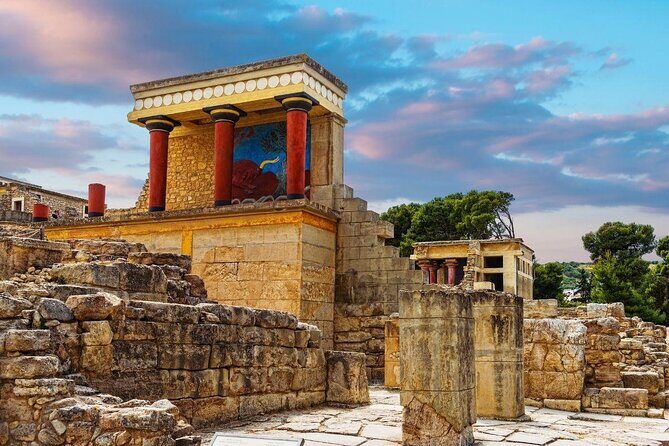
This is essentially a Knossos admission ticket with added audio help. You’re not paying for a guided group tour here. Instead, you’re paying to walk the palace ruins and restored areas yourself, with an audio layer you can use if you select it.
The Palace of Knossos is the kind of place where it helps to know what you’re seeing. It’s described as the largest Bronze Age archaeological site on Crete and likely the ceremonial and political center of the Minoan civilization. You’ll also encounter the myth roots people talk about in Greece: Knossos is tied to the labyrinth story, and it’s often described as the birthplace of Minoan civilization in popular retellings.
What I like for planning is that the ticket’s format fits different travel styles. If you enjoy wandering and setting your own pace, self-guided works well. If you prefer a person to explain where to stand and what to notice, you might find a guide more efficient—especially for the trickier parts of the layout.
Other Knossos Palace tours we've reviewed in Heraklion


Price and value: $33.12 for a phone-assisted visit
At $33.12 per person, this isn’t a “cheap and cheerful” add-on. The value comes from what’s bundled with admission:
- Regular entry ticket to Knossos
- A Heraklion city self-guided audio tour included (you get all options)
- Knossos self-guided audio tour included if you choose that option
So you’re not just buying a ticket to a museum-like site—you’re also buying audio support you can use before or after your visit.
That said, the reviews and the logistics point to one big truth: the audio experience can be hit or miss depending on your phone, reception, and how the stations/app behave when you’re standing in the ruins. If you’re someone who wants everything to run flawlessly, factor in that possibility. If you’re the kind of traveler who’s happy to use site signage, then this price can feel fair for what you get.
Timing matters: when to visit for an easier walk
The ticket duration is listed as about 1 to 3 hours. In real-world terms, I’d treat 90 minutes as a solid minimum if you want to read signs and not rush room-to-room.
Also, temperature is a practical factor at Knossos. If you’re visiting in warmer months, going later can help with comfort. One common planning pattern is: afternoon visit for better weather and sometimes less pressure than the earliest entry windows. If you’re traveling with kids or anyone who gets heat-sensitive, build in buffer time so you’re not stuck sprinting through ruins while you’re trying to manage the audio stations.
Getting from Heraklion to Knossos (and back)
Knossos is the closest major site to Heraklion, which makes it easier to fit into a day. You’ve got a few options:
- Taxi or car: straightforward and time-efficient
- Bus: available, but it can take longer
For planning, I’d think in terms of travel time plus site time. A taxi-driven day can feel smooth because you avoid waiting and schedule drift. One useful tactic is doing a taxi out to the site and then arranging your return separately, especially if you want to spend the rest of the afternoon in Heraklion city.
Entering Knossos: what you’ll see right away
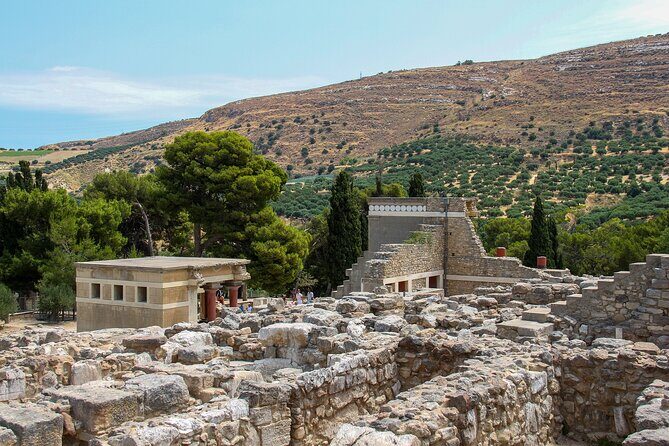
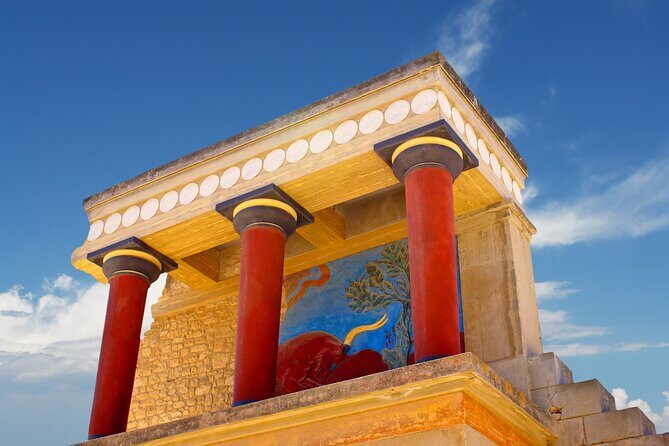
Once you’re through entry, the palace layout becomes the main event. Knossos is famous because it’s not a single intact building. It’s a mix of ruins and partially restored sections, tied to different phases of use.
Here’s what stands out based on the site’s description and how it’s commonly presented:
A few more Heraklion tours and experiences worth a look




The labyrinth myth and the “last palace” phase
Knossos is linked to the labyrinth story, but what you’re physically walking through is the remains of a major palace complex. The largest palace at Knossos dates to around 2000 B.C. (and the site is described as being built roughly 3,700 years ago). Expect a maze-like feel even in modern form: corridors, openings, and room clusters that don’t behave like a typical museum floor plan.
Arthur Evans and why explanations matter
The site was excavated in the early 20th century by Arthur Evans. That matters because Knossos is one of the places where restoration choices and archaeological interpretation are part of the story. In practical terms, signage and audio help you connect what’s original, what’s reconstructed, and why archaeologists think the place mattered.
The “health system” and murals
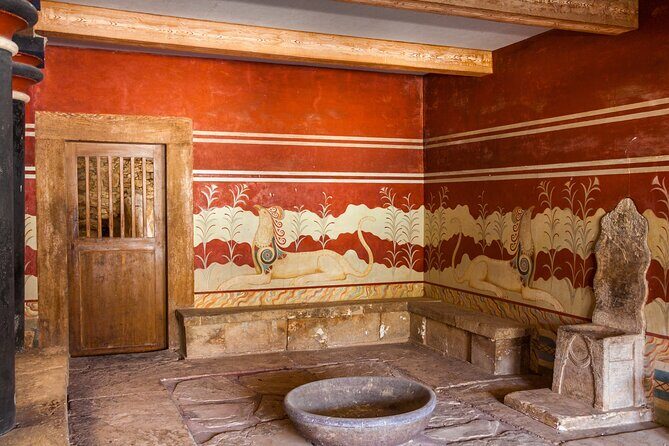
The palace is described as having even a health system, and it was decorated with impressive murals. Even if you can’t see every detail at a distance, it’s a reminder that you’re not just looking at stone piles. This was a functioning, decorated complex in its day.
King Minos’ throne area
One of the most specific highlights is the throne of King Minos, which is described as still intact. When you plan your time, aim to see it calmly. It’s the kind of anchor point that makes the rest of the palace feel more coherent.
Audio guide reality check: great when it works, annoying when it doesn’t
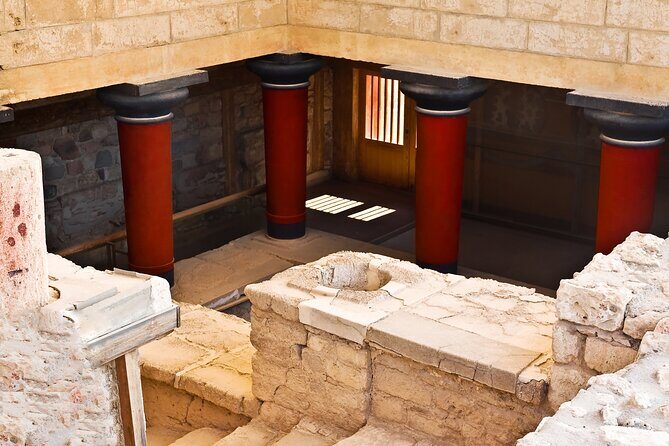
This is the make-or-break part of the ticket experience.
The Knossos audio tour is self-guided and is delivered through a phone. That means:
- you’ll need your phone ready
- you may need reception or a stable connection depending on how the app loads
- navigation can be trickier than it sounds in your hotel lobby
Two recurring friction points show up in real-world use:
1) Hard-to-follow audio with no easy visual map
Some visitors find the recording challenging to track because the palace is complex and it’s not always obvious where you are in the sequence. The audio can provide lots of information, but you may want stronger visual guidance—like top views or station maps—so you don’t lose your place.
2) Station navigation can feel confusing
There are described to be over 20 stations. If the app doesn’t make station-to-location connections clear, you can end up wandering, backtracking, or listening at the wrong time. A common fix is slowing down and treating the palace as sections—finding a meaningful feature, then letting the audio catch up.
If your audio isn’t working when you arrive, there’s also an approach of scanning a QR code and downloading the related app for free. But if you paid for an audio plan elsewhere or expected a specific version to work instantly, that can complicate matters. I’d treat the phone setup as part of your prep, not something you handle after you get hot and tired in the ruins.
Site signage vs. audio: how to get the best mix
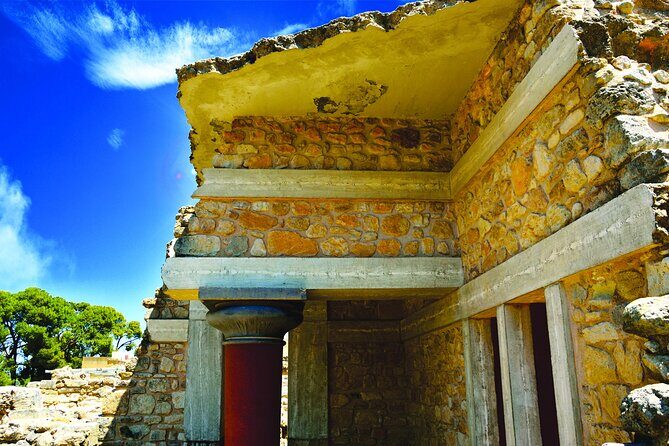
Even if you use the audio, don’t ignore what’s right in front of you. Knossos has signboards that help explain where different parts of the palace are and what the excavated areas represent. This can be especially useful because Knossos leaves room for interpretation. Some details are known from archaeological work; others are reconstructed or debated.
My practical recommendation: use the audio for story and context, and use the signs to keep your bearings. If the audio is frustrating, you can still have a satisfying visit by focusing on the biggest landmarks—like the throne area—and letting the signage fill in the gaps.
What to expect from the visit flow (1 to 3 hours)
Here’s a pacing framework that matches the site’s size and the ticket’s self-guided nature:
First stretch: orient yourself
Start by taking in the palace layout and then choose one or two “must-see” anchors. If you have audio running, this is where you want to make sure you can follow the station logic without losing time.
Middle stretch: slow down for the connections
This is where the Minoan context becomes real. You’ll pass through rooms and corridors where the scale and arrangement help explain why Knossos is seen as a ceremonial/political center. If your audio is clear, this is when it can feel like the palace makes sense.
Final stretch: read, compare, and finish at your own pace
By the end, you’ll usually notice how much of the site is about partial restoration. Don’t feel pressured to “finish every room.” If you’ve seen the throne area and the key zones explained by signs, you’ll walk away with a stronger mental map than you’d get from a rushed circuit.
Comfort and extras: coffee and a gift shop
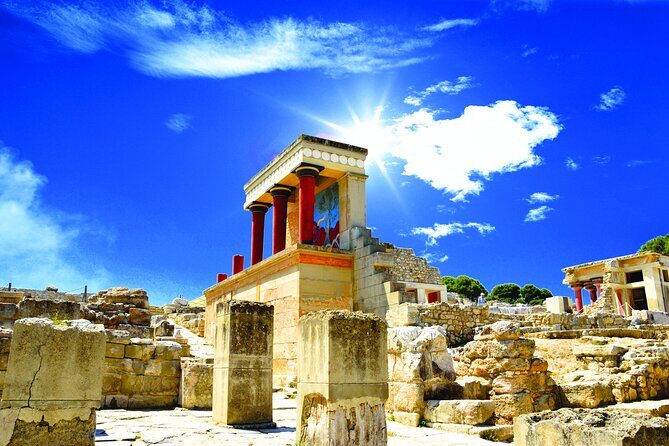
Knossos is set up to handle visitors, including a coffee area and gift shop. This matters more than it sounds, because it gives you a place to reset if you’ve been reading and listening for a while. If your audio session turns into a navigation challenge, the ability to pause helps you regain control of your visit instead of forcing the pace.
Also, the entry and exit process is described as well organized, so you’re less likely to feel stuck in long bottlenecks after you’re done.
Who should book this Knossos audio ticket?
This ticket fits best if you:
- want to explore Knossos at your own pace
- enjoy history explanations even when you have to piece them together
- are comfortable using a phone on-site
- can handle a self-guided route without perfect navigation
It may not be the best fit if you:
- strongly prefer a human guide to point out the key features
- get frustrated when apps are confusing or audio is hard to follow
- rely on audio as your only explanation tool
For many people, the sweet spot is doing self-guided but keeping your expectations grounded. You’re buying admission plus audio support—not a guaranteed guided walkthrough.
Should you book this Knossos ticket with audio?
I’d book it if you want flexible timing and you’re comfortable using your phone for an audio tour. The included admission is the core value, and the audio can seriously help if you treat it as optional support rather than an infallible script.
I’d skip or adjust expectations if you know you dislike station-based apps or you’d rather have a real person explain the palace. If that sounds like you, consider adding a live guide or planning extra time to rely more on signage.
If you do book, plan for about 90 minutes minimum, bring a charged phone, and treat the audio as your helper—not your boss.
FAQ
How long is the Knossos archaeological site visit?
The ticket is listed for about 1 to 3 hours, depending on how fast you move and how much you read or listen to the audio.
Is the tour offered in English?
Yes. The experience is offered in English.
What’s included with the ticket besides entry?
It includes a regular entry ticket plus a Heraklion city self-guided audio tour (all options). The Knossos self-guided audio tour is included if you select that option.
Does the audio guide require a phone?
Yes. The audio guide is run off your phone, so you’ll want to have your device ready for use during the visit.
What if the audio isn’t working when I arrive?
You can scan a QR code and download the free app as described, but if your setup doesn’t match what’s provided, audio may not play as expected.
Do I need the audio option selected to get Knossos audio?
Yes. The Knossos self-guided audio tour is included only if you select that option.
How do I get to Knossos from Heraklion?
Knossos is accessible by taxi, car, and bus. The bus takes quite a long time compared with taxi or car.
How much time should I plan for exploring Knossos on my own?
Plan on at least about 1.5 hours if you want to finish exploring comfortably by yourself or as a family group.
Is there an age requirement for this ticket?
Yes. This ticket is for travelers over 25. Reduced-price tickets are not available online.
Is this ticket refundable if I change my mind?
No. The experience is non-refundable and cannot be changed for any reason.