REVIEW · HERAKLION
Private Tour-Knossos Palace Zeus Cave Olive Oil Mill & Wine
Book on Viator →Operated by Tours in Heraklion · Bookable on Viator
A day that mixes Minoan ruins and real village life. This private-style outing from Heraklion puts you on the Lasithi Plateau with a lot of hands-on food and craft moments, then finishes at Knossos Palace for the big-name archaeology.
I especially like how the pace gives you actual time in places like the olive oil mill and the pottery workshop, not just a quick walk-by. I also love the small-group feel (max 7 people), where guides like Spyros, Stavros, Dimitrios, and Mike tend to bring the history down to everyday details you can see and taste. The main drawback to plan for is that it’s a long driving day, so you’ll want comfortable shoes—and note that the Zeus Cave portion may be affected since it’s currently closed.
In This Review
- Key highlights at a glance
- Why This Tour Feels Like Crete, Not Just Stops
- Price and What’s Included in Your Van Day
- Gouves Olive Oil Factory: The Taste Test That Makes It Real
- Lasithi Mesa Coffee Stop: Mountain Rhythm and Local Cookies
- Psychro Pottery Workshop: Try the Clay, Learn the Pattern
- Windmills of the Lasithi Plateau: The Photo Stop With a Story
- Tzermiado Stroll: Narrow Streets, Old Houses, Short Pause
- Lunch at Restaurant Tzanakis Michael: Optional, Choose Carefully
- Krasi’s 2,400-Year Platanus Tree: A Quiet Stop That Lands
- Aposelemis Dam: Scenic Engineering on the Way Back
- Knossos Palace in 90 Minutes: Plan How You’ll See It
- Who This Tour Suits Best
- Should You Book This Lasithi Plateau and Knossos Tour?
- FAQ
- What’s the total duration of the tour?
- Is pickup included?
- Is the tour private?
- What’s included in the price?
- What does the Knossos visit cost?
- Is lunch included?
- Will Zeus Cave be visited?
- What if I have food allergies or intolerances?
Key highlights at a glance
- Small group (up to 7 people): more personal conversation and less rushing between stops
- Olive oil mill tasting: see modern pressing plus traditional methods, then taste the results
- Hands-on pottery time: shape clay at a working studio and learn how designs evolved from Minoan motifs
- Lasithi Plateau views and windmills: old irrigation and grain-grinding windmills with strong photo potential
- Knossos Palace visit (90 minutes): get a guided-or-not plan that fits the site’s scale and layout
Why This Tour Feels Like Crete, Not Just Stops
This is the kind of day that makes Crete feel lived-in. You start with food you can trace directly to the landscape, then shift into craft, mountain villages, and finally the Minoan power center at Knossos. It’s not only history on paper; you’re seeing how people make, store, and celebrate what grows around them.
The small size matters. When the group is capped at seven, your guide can slow down when you ask questions and speed up when you want photos. In the reviews, guides like Spyros and Stavros get singled out for adding personal stories and local context, not just reciting facts.
One more practical point: this is a full-day drive. Expect scenic breaks, but also stretches of road time. If you hate long bus rides, plan for snacks and hydration (you’ll have bottled water, plus tastings during the day).
Other Knossos Palace tours we've reviewed in Heraklion
Price and What’s Included in Your Van Day
At $151.17 per person, you’re paying for door-to-door pickup, private-style transport in a Mercedes van, and a local English-speaking driver guide. That can be good value in Crete because a lot of the most interesting stops aren’t clustered in one walkable zone.
Here’s what’s included that really reduces hassle:
- Pickup and drop-off from your area (covered regions include Heraklion, Elounda, Hersonissos, Malia, Ag. Pelagia, Ag. Nikolaos, Sisi, and Rethymno in the private option)
- Mercedes Benz van and local English-speaking driver guide
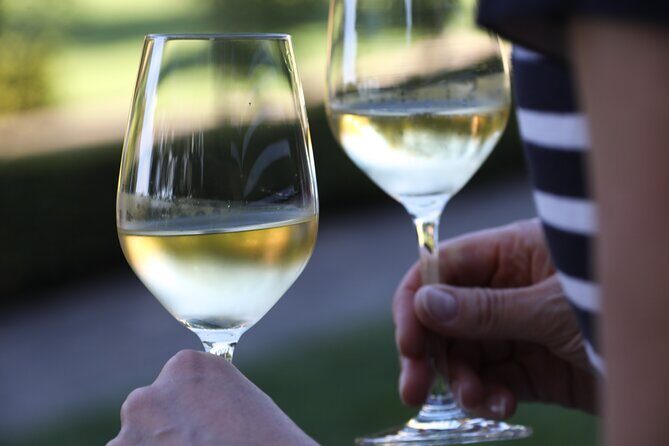
- Greek coffee, raki, and refreshments, plus bottled water
- Cretan wine for the private tour
- All fees and taxes for the included stops
What’s not included is mainly the Knossos ticket (and lunch if you choose it). So your real cost at the end can be a bit higher if you add the optional Knossos licensed guide, or if you opt for the taverna lunch.
Gouves Olive Oil Factory: The Taste Test That Makes It Real
Your first real culture hit is an olive oil factory stop in Gouves. You’ll see a mix of modern pressing equipment alongside traditional methods passed down in the family. That blend is the point: Crete didn’t abandon the old ways. It built on them.
The tastings are the payoff. You get to taste olive oil made from the harvest, and the experience is less about learning trivia and more about learning what fresh oil actually tastes like. If you’ve only had bottled grocery olive oil, this is often a shock—in a good way. Fresh oil tastes sharper, greener, and more alive.
How long is it? Around 30 minutes, with admission ticket marked as free. The time is tight but designed to get you enough explanation to understand what you’re tasting, without turning the day into an oil class.
Potential drawback: if you don’t care about food production or taste work, this stop might feel shorter than you’d want. But even non-food people usually remember the moment because you’re standing where the product is made.
Lasithi Mesa Coffee Stop: Mountain Rhythm and Local Cookies
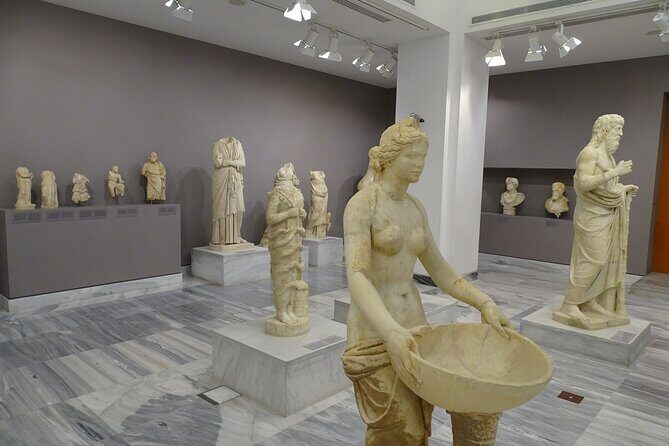
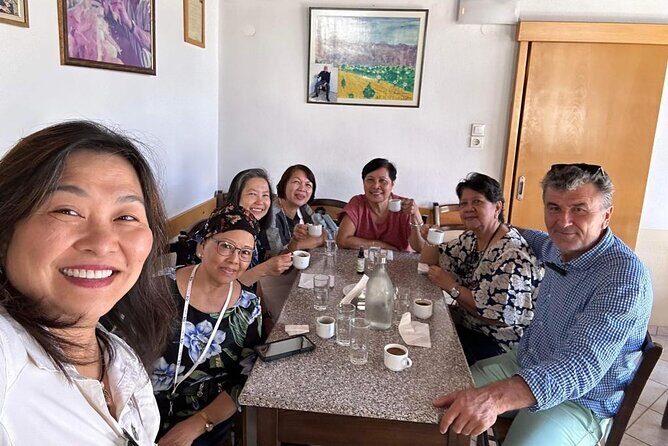
Next comes Lasithi Mesa, a traditional coffee shop stop on the plateau. This is one of those experiences that seems simple until you’re there. You get a break from driving, you sip Greek coffee (and often there’s a cookie moment, depending on what’s set up), and you hear local stories that connect the dots between village life and the surrounding land.
This stop is roughly 30 minutes, with admission ticket free. That duration is useful. It gives you time to reset—plus you’re not dragging the group into a long meal.
What to expect: a calmer vibe than the larger cities. If you like small conversations, this is where your guide can bring in details about how people live and eat up on the plateau, and how agriculture shapes daily routine.
Possible consideration: it’s a coffee stop, not a museum. If you’re expecting a formal activity, you may need to treat this like a break with cultural context rather than a structured attraction.
Psychro Pottery Workshop: Try the Clay, Learn the Pattern
In Psychro, you visit a pottery workshop on the Lassithi Plateau. This is one of the best-value stops because it’s genuinely hands-on. You’ll see shelves of finished pieces, work-in-progress pottery, and pieces that are drying, glazing, or waiting on firing.
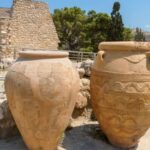
The most useful part is the design connection. You’ll learn how Minoan influence shows up in Cretan pottery—how patterns and shapes evolved but stayed inspired by ancient motifs. That matters because it turns pottery from a souvenir into a story you can recognize at a glance.
And then you get to do something, not just watch. The potter lets you shape clay under guidance, which turns the stop into a personal memory.
Time on this stop is about 1 hour, admission ticket free. For people who like making rather than only looking, this can be the highlight of the day.
Possible drawback: pottery takes time to do well. Don’t expect a fast “press stamp, leave” moment. If you rush or hate slower craft processes, you may feel the time stretch a little.
Other olive oil and culinary tours we've reviewed in Heraklion
Windmills of the Lasithi Plateau: The Photo Stop With a Story
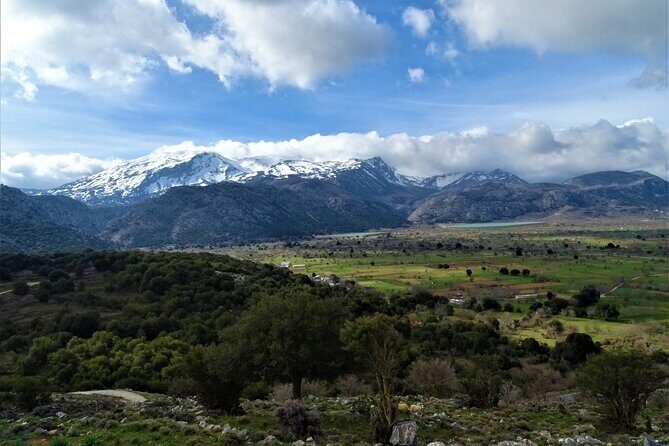
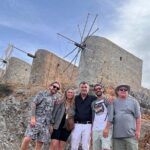
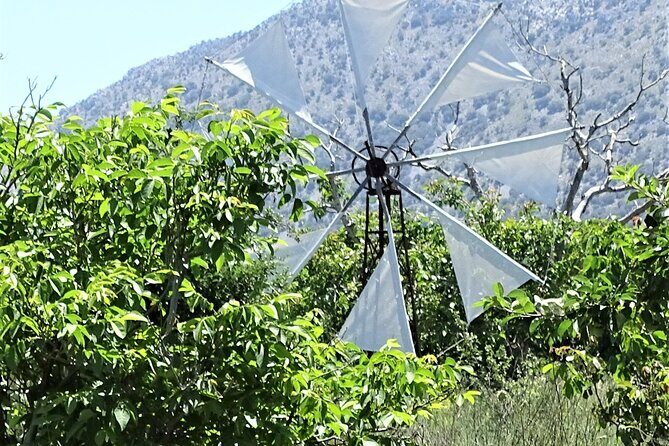
After pottery, you head to the Windmills of the Lasithi Plateau. Yes, you’ll get mountains and views for pictures. But the real point is why the windmills exist: for centuries they powered grain grinding and helped with irrigation on the plateau.
It’s a strong reminder that engineering here was tied to survival and farming. You’ll hear how generations used local materials and wind power to manage water and food—practical innovation, not a romantic myth.
Time is about 1 hour, with admission ticket free. You’ll likely have enough time to take multiple photo angles, including where the mills appear against the surrounding terrain.
Consideration: weather matters. If clouds or rain roll in, photos and views can disappoint. But the history explanation still works even on a gray day.
Tzermiado Stroll: Narrow Streets, Old Houses, Short Pause
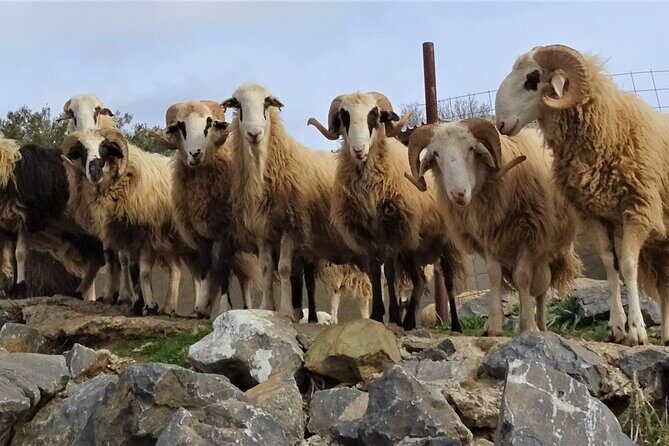
In Tzermiado, you get a short walk through narrow streets and the village’s capital feel on the plateau, with time to admire older houses and get your bearings for the mountain landscape.
This stop is about 30 minutes, admission ticket free. It’s intentionally brief, so it doesn’t steal time from the higher-impact food and craft moments.
I like this kind of stop because it balances the day. After factories and workshops, a simple village wander helps you feel the place at human scale.
Potential drawback: if you’re hoping for a long guided tour of architecture, this may feel too short. But as a palate cleanser between stops, it does its job.
Lunch at Restaurant Tzanakis Michael: Optional, Choose Carefully
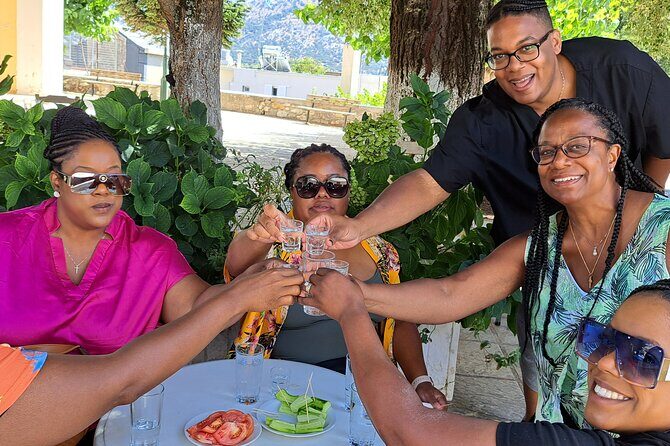
On the return, you’ll have an optional lunch stop at a family taverna: Restaurant Tzanakis Michael. This is where the day can become either very satisfying or just fine, depending on what you order and how hungry you are after the driving.
The menu-style range offered includes moussaka, saganaki, stuffed vegetables, Greek salad, and lamb in oven. Lunch is about 1 hour, and it’s not included in the tour price.
What I think makes this stop practical: it keeps you from hunting for food in a rural area with limited options, and you can eat something made from fresh local products of the region.
Consideration: because lunch is optional, you might want to check dietary needs ahead of time. The tour does ask you to contact them if you have allergies or intolerances.
Krasi’s 2,400-Year Platanus Tree: A Quiet Stop That Lands
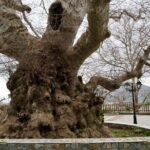
In Krasi, the day includes a stop at a very old Platanus tree—often described as around 2,400 years old. This isn’t about tickets or a formal exhibit. It’s about standing in the shade of something that has outlasted empires.
You’re looking at a massive tree in a village square, with a cool canopy and a trunk shaped by centuries. There’s also local folklore around it, which helps the stop feel connected to people rather than just an object on a route.
Time is only about 10 minutes, free entry. That short duration is smart: it gives you a reset moment without slowing the whole schedule.
Potential drawback: if you prefer active stops over quiet ones, this may feel like a quick photo break. Still, many people enjoy it because it gives your brain a different kind of moment.
Aposelemis Dam: Scenic Engineering on the Way Back
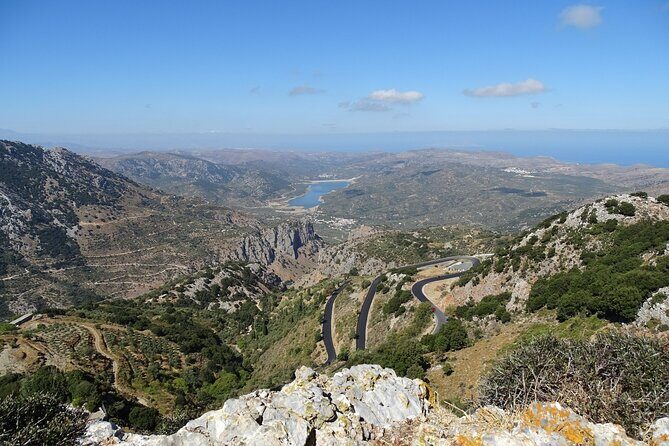
Before Knossos, there’s a stop near Aposelemis Dam, described as the largest dam in Crete. It’s a classic road-trip pause that adds a change of scenery—reservoir views, countryside, and the feeling of scale.
This stop is around 30 minutes, free entry. It also gives you time to break up the driving before the big final site.
The value here is the contrast: you’ve been in agriculture and villages, and now you’re seeing modern water infrastructure that supports island life.
Consideration: views can depend on light and weather. Even without perfect skies, it’s a worthwhile stretch break.
Knossos Palace in 90 Minutes: Plan How You’ll See It
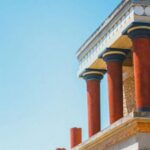
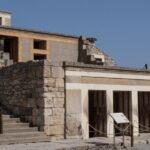
The day ends at the Palace of Knossos, the major Minoan center and one of Crete’s most visited archaeological sites. The basics you’ll want in your head: the palace dates back to around 1900 BC and was destroyed roughly 1380–1100 BC.
You’ll have about 1 hour 30 minutes at the site. That’s a good window, because Knossos is complex. You won’t see every corner like a hardcore archaeology tour, but you can still walk away with real understanding if you follow your guide’s logic and focus on the main areas.
One practical note: Knossos entrance is not included (listed at 20 euro per person). There’s also an option to add an official licensed tourist guide at Knossos for 120 euro per group. If you like archaeology details and want someone licensed to handle the site interpretation, this upgrade can be worth it.
What I like about using a driver guide here: they often connect the palace to the living Crete theme you’ve experienced all day—agriculture, water, craft, and how power centers worked.
Potential drawback: Knossos can get busy. Since you’re on a structured tour day, you’ll likely time your visit better than an independent wander, but you should still expect some crowd energy at peak times.
Who This Tour Suits Best
This tour is a great fit if you want:
- Village life and food culture, not just landmarks
- A small group where the guide can talk with you, not read from a script
- A mix of agriculture, craft, and a major historical site
It’s also a nice first Crete day from Heraklion because it hits a broad slice of the island: plateau villages, traditional production, and Knossos all in one go.
If you’re the kind of person who only wants one or two big sights and hates driving, you might be happier with a shorter half-day format. This one is for people who like a full day outdoors in a working region.
Should You Book This Lasithi Plateau and Knossos Tour?
I’d book it if your ideal Crete day includes tasting local products, watching real craft work, and ending with a famous site you can actually connect to the rest of your day. The included coffee, raki, refreshments, and Cretan wine help make the day feel complete, and the small group size is a real quality marker.
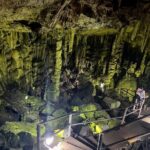
I’d hesitate only if you strongly dislike long road time, or if you’re counting on the Zeus Cave stop by name. The data says Zeus Cave is closed for the moment, so double-check what your day will include when you book.
If you want a practical rule: choose this tour when you want Crete in layers—food first, village next, and Minoan history at the end.
FAQ
What’s the total duration of the tour?
It runs about 7 to 8 hours, depending on timing and the day’s flow.
Is pickup included?
Yes. Pickup and drop-off are included in the private tour option from Heraklion and several nearby areas like Elounda, Hersonissos, Malia, Ag. Pelagia, Ag. Nikolaos, Sisi, and Rethymno.
Is the tour private?
It’s a private tour/activity with a maximum group size of up to 7 people. Only your group participates in the private option.
What’s included in the price?
Transportation in a Mercedes van, a local English-speaking driver guide, liability insurance, all fees and taxes for included parts, bottled water, Greek coffee, raki and refreshments, plus Cretan wine for the private tour.
What does the Knossos visit cost?
Knossos Palace entrance is not included. The ticket is listed at 20 euro per person.
Is lunch included?
Lunch in the traditional taverna is optional. Restaurant Tzanakis Michael lunch is not included in the price.
Will Zeus Cave be visited?
The listing data notes that Zeus Cave is closed for the moment, so it may not be included as originally named.
What if I have food allergies or intolerances?
You should contact the tour operator with your allergy or intolerance details so they can advise you before the tour.