REVIEW · HERAKLION
Food Tour in Heraklion – Discover Cretan Flavors
Book on GetYourGuide →Operated by Porto Planet · Bookable on GetYourGuide
Heraklion bites come with big-city stories. This 4-hour food tour in Heraklion strings together local tastings and classic landmarks, so you taste your way through the Cretan capital instead of just browsing it. You’ll hit markets, churches, and old Venetian-era sights, then slow down for the kind of Cretan comfort food you can’t easily recreate on your own.
What I like most is the mix of tastings and real places—think bougatsa with strong Greek coffee, honey, traditional sweets, and raki. I also like that the tour work includes a family-run stivania workshop, where you learn about the handmade leather boots Cretan shepherds wore, not just what something tastes like. In the reviews, the English host named Rallou gets particular praise for making Heraklion feel easy to understand.
One thing to consider: in noisy areas, hearing the guide can be tricky. One reviewer even wished for a microphone (or headsets), so if you’re sensitive to noise, plan to stay close to the host when the group pauses.
In This Review
- Key things to know before you go
- A Heraklion Food Tour Built Around Taste and Landmarks
- Where you start: outside the Heraklion Archaeological Museum
- Plateia Eleftherias to Venetian Loggia: walking the everyday heart
- Koules Fortress and the Venetian Harbor: views you’ll remember
- A café break with bougatsa and Greek coffee
- Agios Markos, Agios Titos, and Agios Minas: churches between bites
- Rocca a Mare Fortress: sightseeing break with real viewpoint payoffs
- Central Market and the food you can picture later
- Pastry History Museum finale: where the sweetness has a story
- Value for money: what you’re really paying for
- Who should book this Heraklion food tour (and who might not)
- Should you book a Food Tour in Heraklion?
- FAQ
- How long is the Food Tour in Heraklion?
- What is the price per person?
- Where does the tour start?
- What’s included in the tour?
- What language is the tour offered in?
- What should I bring?
- Is free cancellation available?
Key things to know before you go
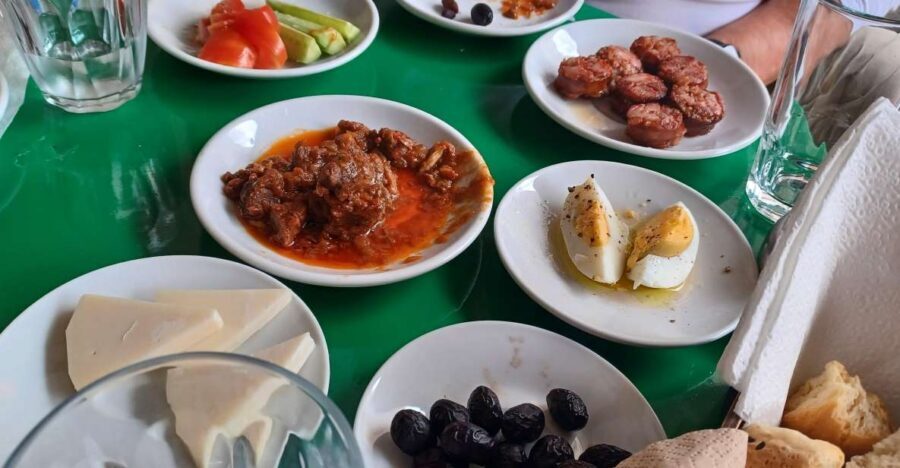
- Bougatsa + Greek coffee sets the tone early, so you’re not walking hungry through the old town
- Small-group pacing keeps it human, not rushed herd-walking
- Stivania workshop adds hands-on culture beyond the food
- Old Market/Central Market stop gives you the smells and ingredients behind the meals
- Photo-stop landmarks cover Venetian and religious sights without making it a lecture
A Heraklion Food Tour Built Around Taste and Landmarks
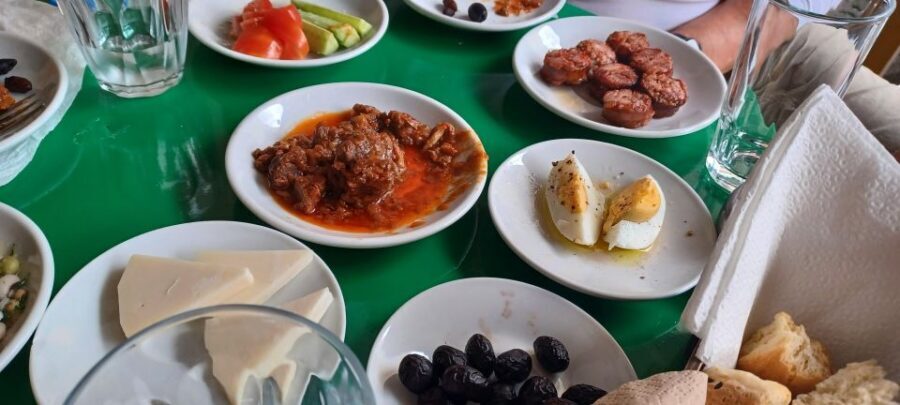
This is a good fit if you want Heraklion to make sense fast. The city can feel like “big streets, lots of history, okay what do I eat?” This tour answers that in a practical way: it teaches you what to order, what to look for in the markets, and why certain flavors matter on Crete.
The best part is how the food and sightseeing support each other. When you’re standing near a landmark, the guide’s stories connect back to daily life—ingredients, traditions, and how locals eat and shop. You’re not stuck in one lane (all food) or the other (all photos). It’s a walking loop with regular breaks.
And yes, it’s designed around real Cretan staples. You’ll start with bougatsa and Greek coffee, then move through local sweets and honey. Drinks like raki are part of the experience too, so you’re not just sampling pastries—you’re tasting the island’s “whole table” culture.
Other food & drink experiences in Heraklion
Where you start: outside the Heraklion Archaeological Museum
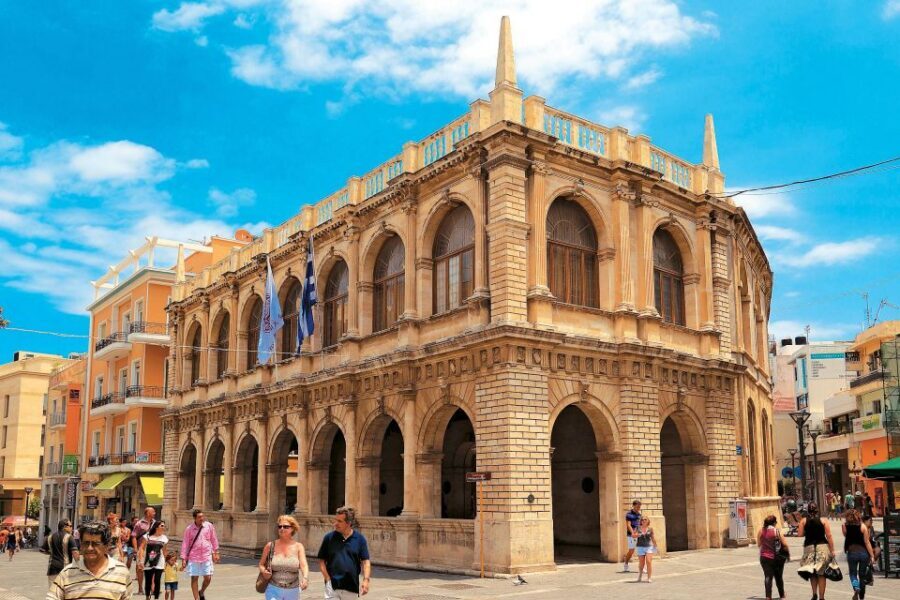
Your tour begins in the center, outside the Heraklion Archaeological Museum area. The meeting point is at the statue in the square—so I recommend arriving a few minutes early and scanning for your host rather than trying to guess from a distance.
From there, the route gets you moving through the core neighborhoods with a steady rhythm: guided walking, short photo stops, and breaks at places where the food actually happens. Because the total duration is 4 hours, you’ll cover a lot without feeling like you’re spending a full day on your feet.
Practical tip: comfortable shoes matter here. This is a walking tour with multiple stops, including longer sightseeing stretches.
Plateia Eleftherias to Venetian Loggia: walking the everyday heart
One of the smartest choices on this itinerary is starting in the places locals move through—Plateia Eleftherias, then along streets like Dedalou where the city shows its texture up close. This is the part where you get your bearings. You see the kind of architecture and street life that makes Heraklion feel lived-in, not staged.
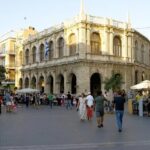
Then you move into the Venetian-era layers of the city, including the Venetian Loggia. Even if you’re not a “history person,” this stop works because it’s not just about dates. The guide connects the old Venetian presence to the way Heraklion developed as a trading and gathering city—exactly the background you want before you hit markets and food shops later.
You’ll also get photo stops that keep the walk light. Places like Morosini Lions Fountain are quick, but they help you “place” what you’re seeing on the ground. When you return later on your own, those landmarks will help you navigate.
Koules Fortress and the Venetian Harbor: views you’ll remember
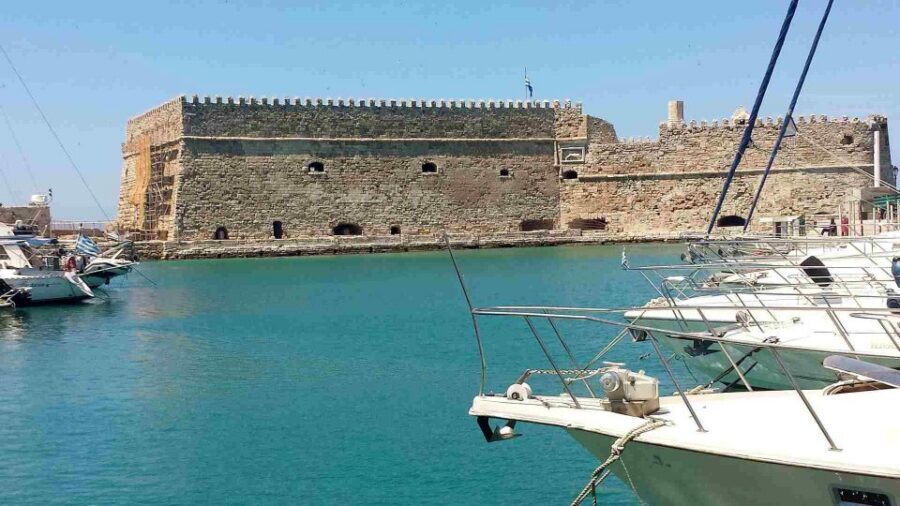
The highlights call out Koules Fortress (Castello del Molo) at the Old Venetian Harbor, and that’s a meaningful stop to include. This is where Heraklion’s waterfront story becomes visible. Fortifications tell you how cities protected trade and access—then suddenly the market stops make more sense.
The waterfront area also gives you a breather from the denser streets. Even if the tour is time-focused, this is the part where you can look out and take in the scale of the harbor and the old-city layout.
If you’re planning photos, go ready. You’ll have photo-stop moments, but not an entire free roaming block. Bring your camera battery, and keep your lens cap off until you’re at the spot.
A café break with bougatsa and Greek coffee
After some landmark walking, the tour includes a local café break—and this is not filler. This is where the experience flips from “what you’ll eat” to “okay, taste it now.”
You’ll start with Cretan bougatsa, paired with strong Greek coffee. Bougatsa is one of those foods that’s almost a shortcut to understanding Greek-Cretan comfort eating: warm, filling, and easy to recognize once you taste it. The coffee pairing also makes sense—Crete loves a proper caffeine hit with dessert and pastries.
Then you’ll move into other sweetness-forward tastings: premium local honey and traditional Cretan sweets. This is a nice sequence because it trains your palate. Once you taste honey and sweets, you’ll understand why Cretan food often balances herbs, dairy, and honey-like sweetness rather than going purely savory.
This break also matters for energy. The tour keeps a pace that’s fast enough to cover key sights, but frequent stops mean you’re not stuck marching between tastings.
A few more Heraklion tours and experiences worth a look


Agios Markos, Agios Titos, and Agios Minas: churches between bites
Your walking route includes major religious stops such as:
- Βασιλική Αγίου Μάρκου
- Agios Titos Church
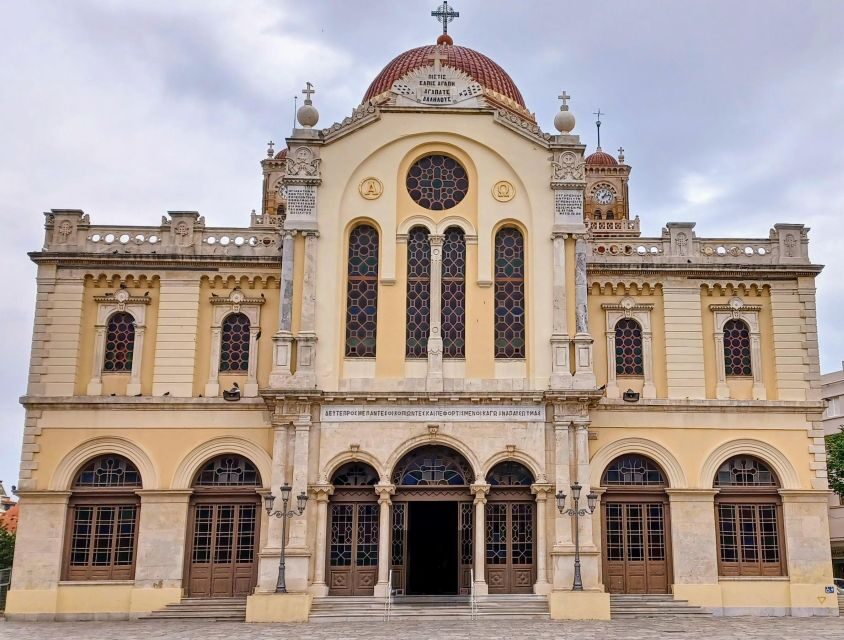
- Agios Minas Cathedral
These aren’t random photo backdrops. Churches in Crete often act like cultural anchors: they mark community identity and influence how people gather. Having them placed between food moments keeps the tour from becoming a “dessert marathon.”
In particular, Agios Minas Cathedral is a standout for many visitors because it’s a clear, central landmark. You’ll get a guided look plus photo-stop time, so you can take in the architecture and then move on.
This section is also where you’ll feel the tour’s educational tone. Instead of turning every stop into a history lecture, the guide uses the context to explain what you’re seeing and how it ties back to local life.
Rocca a Mare Fortress: sightseeing break with real viewpoint payoffs
The itinerary includes a break time at Rocca a Mare Fortress. This is a big reason the tour feels more like a “Heraklion day” than a pure tasting crawl.
Fortresses give you the big-picture view: how a city defends itself, how it controls access, and how it developed around key approaches. From a practical standpoint, this is also where your legs appreciate a pause. The tour builds in a break, then continues onward with more sightseeing.
One note: you’ll have a mix of walking, guided viewpoints, and photo stops, so if you’re someone who struggles with steady walking, pace yourself during the fortress portion. Stay close when the group moves so you don’t feel rushed at the food and market segments later.
Central Market and the food you can picture later
After more historic stops, the tour hits the Central Market, Heraklion. This is one of the most useful parts of the day because it connects your tastings to the ingredients that made them possible.
You’ll walk through market energy while the guide points out what matters—what locals buy, what shows up in everyday eating, and how you can recognize key flavors. Even if you’re not hunting for souvenirs, the market visit helps you think like a local shopper for the rest of your trip.
This is also where you get an “aha” effect. Once you’ve tasted honey and sweets earlier, you’ll understand what you’re seeing. Once you’ve had bougatsa, you’ll picture how it fits into the wider food habits of the city.
Pastry History Museum finale: where the sweetness has a story
The tour finishes at the Pastry History Museum, with a guided visit and another photo-stop moment. This is a strong ending because it gives your tastings a frame: pastry in Crete isn’t just “dessert.” It’s craft, timing, and local preferences shaped by ingredients available on the island.
If you like learning through food, this ending works well because it doesn’t feel like a final stop designed just to “sell you something.” You’ve already tasted your way through the day; now you’re understanding the background.
Earlier in the tour, you also get a cultural workshop stop focused on stivania (those Cretan leather shepherd boots). Together, the stivania workshop plus the pastry museum make the day feel grounded in everyday Cretan craftsmanship, not only restaurant menus.
Value for money: what you’re really paying for
At $106 per person for 4 hours, this isn’t an “extra snack” add-on. The value comes from the combination:
- Multiple tastings and drinks (including bougatsa, Greek coffee, honey, traditional sweets, and raki)
- English-speaking local host guiding you through the route
- Market time that helps you understand ingredients, not just consume food
- A traditional workshop visit focused on stivania, which is a rare cultural stop for a food tour
If you self-plan in Heraklion, you’d need to coordinate markets, find tastings, and figure out what’s worth your time. This tour removes that guesswork by packing key moments into one efficient route—while also giving you context along the way.
The small-group format also affects value. Smaller groups generally mean more interaction and fewer “did you hear the guide?” moments—though, as one reviewer noted, noise can still make hearing difficult in busy zones.
Who should book this Heraklion food tour (and who might not)
This tour is a great match if:
- You want to experience Heraklion food culture without spending hours researching
- You enjoy walking tours that include landmarks plus meals
- You’re curious about craft traditions like stivania
It may be less ideal if:
- You don’t enjoy walking with frequent photo stops
- You’re very hard of hearing in noise-heavy outdoor areas (the guide’s voice can get swallowed by the background)
If you’re in the “some of both” camp, this is still a solid choice because the day is structured around regular food and café breaks, so it doesn’t stay only in sightseeing mode.
Should you book a Food Tour in Heraklion?
I’d book it if you want the quickest path to feeling like you understand the city. The route does a smart job of connecting old town landmarks, the Central Market, and multiple taste moments—so your trip doesn’t turn into a scattered set of stops.
The price also feels fair for what’s included: tastings, a guided route in English, market access, and a workshop that adds cultural depth. Add in the guide quality praised in reviews—like Rallou’s ability to show Heraklion clearly—and this becomes a high-confidence way to spend your time.
If you want a calm afternoon of sitting and only one meal, this might feel too active. But if you like to walk, snack, and learn while you do it, this is a very sensible way to experience Heraklion.
FAQ
How long is the Food Tour in Heraklion?
The tour lasts 4 hours.
What is the price per person?
The price is $106 per person.
Where does the tour start?
You meet at the statue in the square, at the start point near the Heraklion Archaeological Museum area.
What’s included in the tour?
It includes multiple food and drink tastings, an English-speaking local host, and visits to local markets and traditional workshops.
What language is the tour offered in?
The tour is offered in English.
What should I bring?
Bring comfortable shoes.
Is free cancellation available?
Yes. You can cancel up to 24 hours in advance for a full refund.