REVIEW · HERAKLION
Knossos: Labyrinth of Knossos Skip-the-Line Walking Tour
Book on GetYourGuide →Operated by Travel Crete - WeGuide travelers · Bookable on GetYourGuide
Knossos hits you fast, even if you only have 90 minutes. This skip-the-line walking tour gets you into the palace grounds with a licensed English guide and a plan for seeing the big signatures without getting stuck at the ticket counter. Two things I really like are the chance to focus on the palace’s stand-out engineering and the way the story of Minos, Ariadne, and the Minotaur is tied directly to what you’re looking at.
You’ll get headset support if your group is larger than 6, which matters at a windy, noisy archaeological site. And the tour doesn’t just gesture at myths; it points you toward specifics like the oldest throne in Europe, the oldest theater within Europe, and the water-management systems that show how organized the Minoans were.
One consideration: it’s a lot of walking on uneven ground, and it’s not suitable for people with mobility impairments, wheelchair users, or pregnant women. Also, Knossos entry is tied to a selected time slot, so showing up late can mean denied entry and the need to buy a new ticket.
In This Review
- Key points to know before you go
- Why Knossos feels bigger than it sounds
- Skip-the-line entry and what that buys you
- Meeting point: the simple rule that prevents headaches
- What you’ll see first: the throne, the theater, and the drainage
- The Labyrinth walk: why the layout matters
- The “mini” tour of Minos and the Minotaur
- Minoan sophistication: the technology is the story
- The palace timeline your guide keeps in mind
- Inside the rooms: courts, workshops, cleansing, and daily function
- How long is enough time for Knossos?
- Comfort tips that actually help at Knossos
- Price and value: what you’re paying for
- Who this tour suits best
- Should you book this Knossos skip-the-line tour?
- FAQ
- How long is the Knossos walking tour?
- How much does the tour cost?
- Is the ticket to Knossos Palace included?
- Do I need to wait in line at the ticket counter?
- Will I have a guide, and what language is used?
- Do we get help hearing the guide?
- Where do I meet the guide?
- When should I arrive for check-in?
- Is there an option for transport from Heraklion?
- Are food and drinks allowed inside the palace?
Key points to know before you go
- Skip-the-line entry helps you start right at the palace instead of waiting at the ticket counter.
- Oldest-in-Europe highlights: the throne and the oldest theater are built into the guide’s route.
- Minoan tech you can see: drainage and water management aren’t just trivia; they shape how you understand the palace.
- A myth-led walkthrough: Minos, Ariadne, the Minotaur, and the Labyrinth come up as you move room to room.
- Small group pacing: licensed guide plus headsets (for groups over 6) keep the explanations clear.
- 90 minutes is tight: bring good walking shoes so you can actually enjoy the details.
Why Knossos feels bigger than it sounds
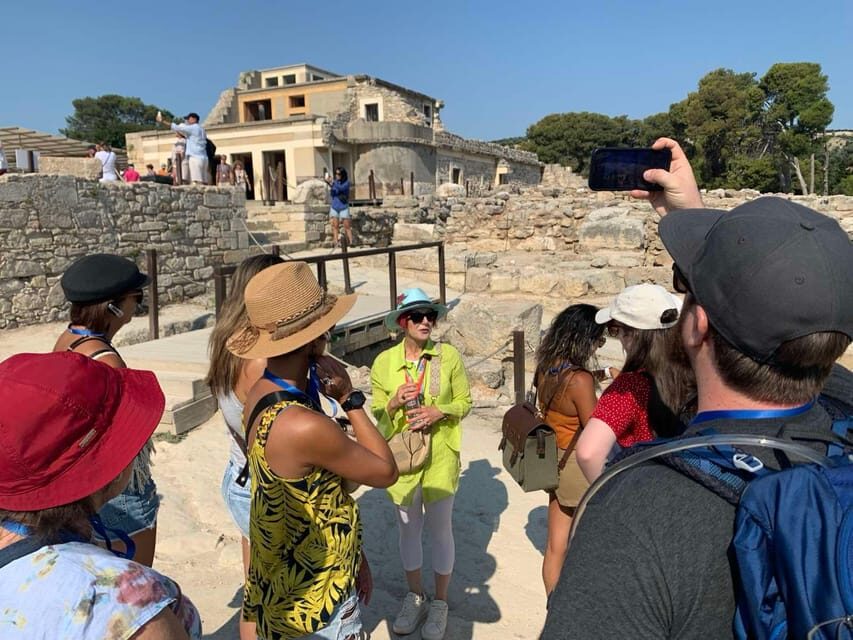
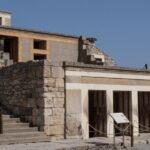
Knossos is listed as an ancient palace that covers about 20,000 square meters, and that number only makes sense once you’re standing in the site. You start to feel the layout like a city, not just ruins. It’s also one of the oldest centers tied to Bronze Age power in Crete, so you’re viewing more than “cool rocks.”
The tour works because it gives you a story to hold onto while you walk. You’re not left reading labels. The guide connects rooms and functions to the legends you already know, especially the Minotaur and the Labyrinth, so the palace stops being random and starts feeling purposeful.
Other Knossos Palace tours we've reviewed in Heraklion

Skip-the-line entry and what that buys you
Knossos can be busy, and waiting around at counters steals your energy. The big value here is skip-the-ticket-line service, which avoids queuing at the ticket booth so you can get moving toward the palace itself.
That may sound like a minor convenience, but it matters because Knossos is a clock-dependent experience. Your tickets are valid only for the selected time slot, and the tour is a shared experience with a firm start. The earlier you check in, the less stressful the whole thing feels.
Also, you’re not just paying for entry. The price includes the general admission fee (20 EUR) and a guided visit with a licensed professional. When you do it this way, your time goes to interpretation, not logistics.
Meeting point: the simple rule that prevents headaches
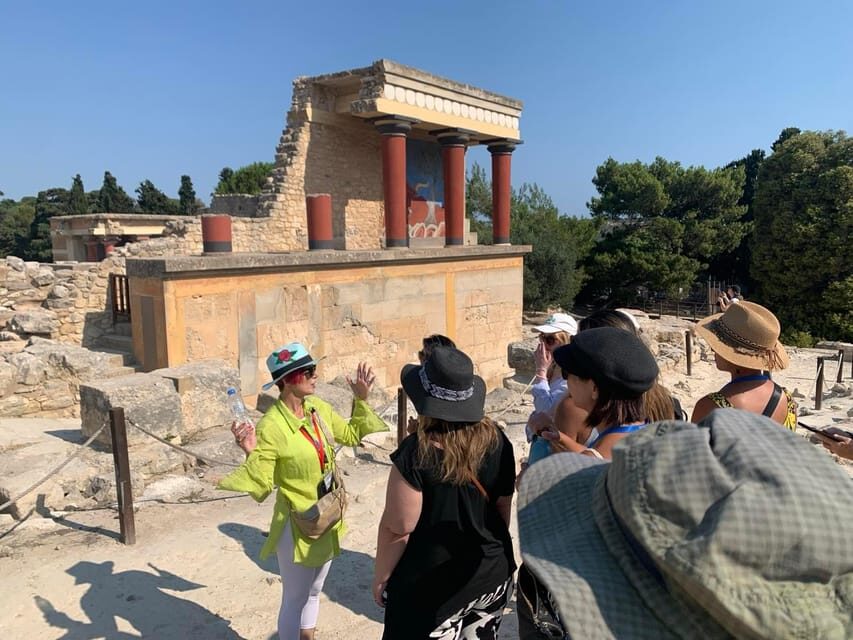
You meet your guide next to the archaeological site entrance by the ticket booth. Your guide will be holding a sign with the WeGuide logo.
The key timing detail is check-in: it starts 20 minutes before your tour start time, in front of the ticket office. And there’s a strict no-exceptions policy if you miss the window for your ticketed slot. If you’re prone to running late, build in extra buffer time from wherever you’re starting in Heraklion.
What you’ll see first: the throne, the theater, and the drainage
The tour’s opening focus is smart: it points you at the palace’s most memorable claims so you don’t leave feeling like you missed the headline moments.
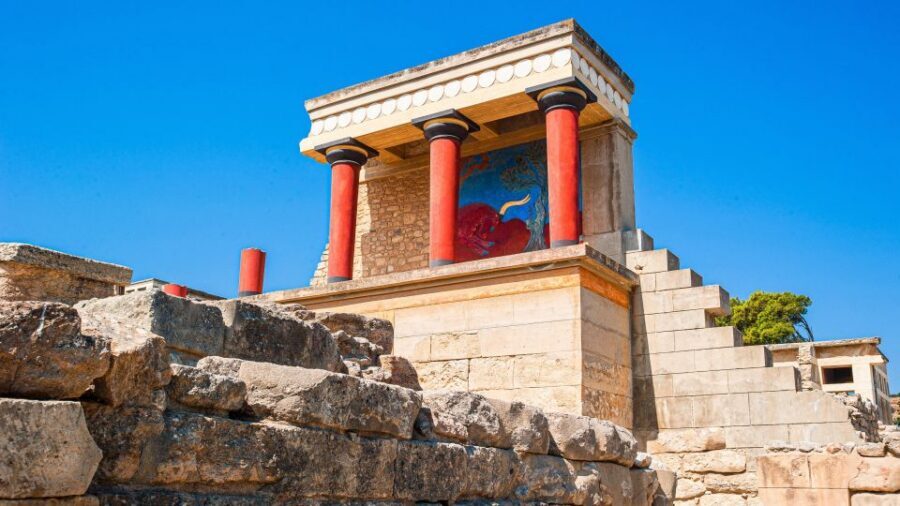
You’ll see the oldest throne in Europe, which anchors the palace’s image of royal authority. You’ll also learn about the palace areas tied to cult and ritual spaces, workshops, shrines, and storage. That matters because Knossos isn’t just a king’s home; it’s presented as a complex system of belief, production, and control.
One of the most fascinating parts is the attention to oldest drainage systems in the world and other water-management features. It’s one thing to hear that ancient people were good at engineering. It’s another to stand near the evidence and understand how water and daily function likely worked inside a palace designed with scale and planning.
Then there’s the oldest theater within Europe. Even in ruins, the idea of communal viewing is hard to unsee once your guide frames what you’re looking at.
The Labyrinth walk: why the layout matters
Knossos is described as a complex of more than 1,500 interlocking rooms. That number can sound like trivia until you’re moving through the site and realizing how easily a layout like this would confuse outsiders—and how it supports the myth of the Labyrinth.
As you wander, your guide points out different categories of spaces, including places for cleansing, bathing areas, toilets, workshops, temples, and shrines. In other words, you see the palace as lived-in infrastructure, not only ceremonial stone.
You also spend time on the palace’s royal quarters: the luxurious domestic areas of the family, plus sanctuaries and storerooms. The tour wording includes pantries once bursting with Crete’s treasures, and that’s the right lens. This isn’t “a palace made of walls.” It’s shown as a machine for wealth, daily routines, storage, and public power.
Other walking tours we've reviewed in Heraklion





The “mini” tour of Minos and the Minotaur
The Minotaur story is the emotional glue of this experience. The tour includes the palace legends—Minos, Princess Ariadne, the Minotaur, and the Labyrinth—and the guide brings them up alongside the spaces that make the myth feel believable.
Here’s why that’s worth your attention: myths stick to your memory when they’re anchored in real geography. You may already know the broad plot, but seeing how a palace layout can inspire the idea of hidden paths and controlled movement helps the story make practical sense.
If you’re traveling with kids or you’re a myth person yourself, this part is likely the most fun. If you’re not, it still helps you remember where you’ve been and why a particular wing or cluster of rooms is significant.
Minoan sophistication: the technology is the story
The tour emphasizes how sophisticated and technologically skilled the Minoans were. And at Knossos, that claim isn’t abstract.
The highlights list specific proof points: drainage systems and water management, plus a sophisticated palace layout with courts and specialized areas. You also get a sense of architectural innovation—things like multiple-storey design and how the palace functioned as a center of power for Bronze Age Crete for more than 300 years, according to the tour’s explanation.
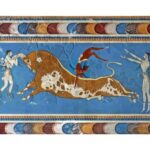
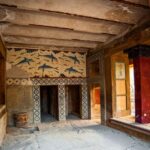
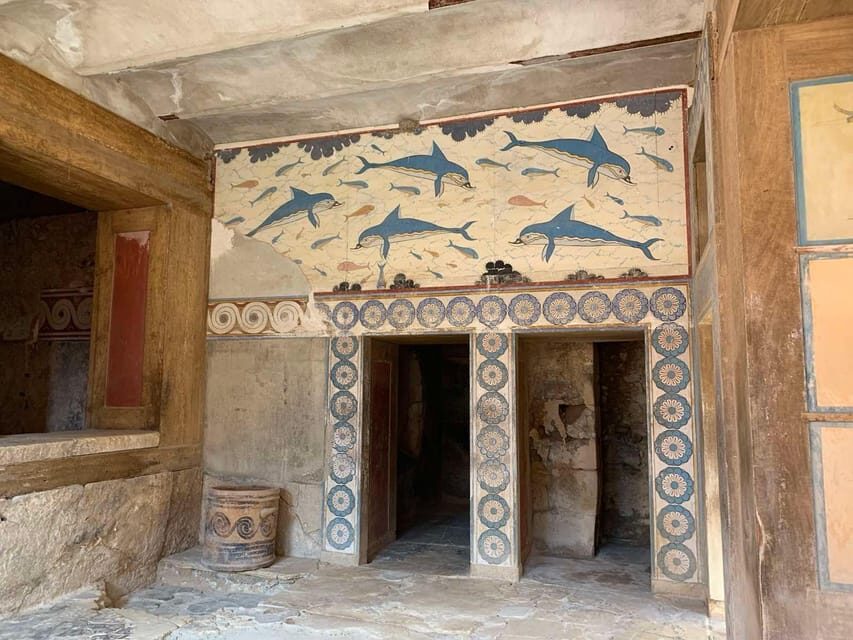
The palace is also described as having splendid frescoes, hundreds of rooms distributed in four storeys, and major storage and workshop zones. Even though much of what you see is ruin, your guide’s framing helps you “complete the picture” into a complex society running on planning and labor.
It’s a good reminder that ancient life wasn’t just temples and legends. It was scheduling, moving goods, managing water, and designing spaces for how people actually lived.
The palace timeline your guide keeps in mind
You’re not only walking; you’re also getting a basic sense of how the palace evolved. The tour notes that the first palace was erected soon after 2000 BC, then a catastrophic earthquake destroyed it around 1700 BC. A new palace was built right after, and that later palace became the monumental center most people associate with Knossos.
This matters because it changes what you’re seeing. When you understand the palace has phases, the site feels less like one frozen moment and more like repeated rebuilding and reworking. It helps your brain accept why some sections feel different in layout and emphasis.
Inside the rooms: courts, workshops, cleansing, and daily function
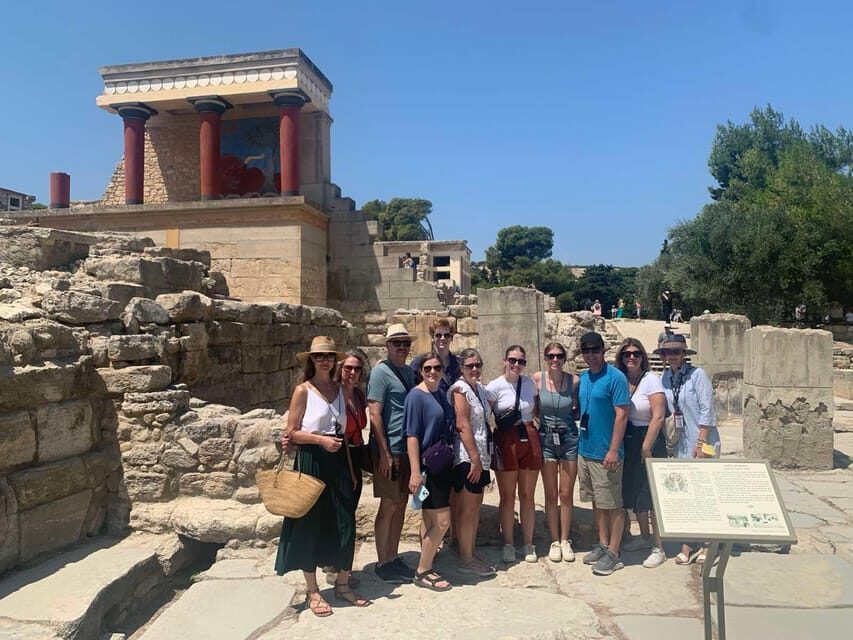
A fun part of this tour is how it moves beyond “wow” architecture into day-to-day realities. The guide includes areas for workshops, cult sites, temples, shrines, storage spaces, and cleansing rooms, plus bathing areas and toilets.
That mix is exactly what makes Knossos interesting compared with simpler ruins. You start to notice how the palace seems designed for both public ritual and practical life. You can almost imagine staff moving between workshops and storage, then shifting into more formal spaces for ceremonies and feasts.
Your stops also cover specialized workshops and spacious courts, which are described as places hosting ceremonies and gatherings. That helps connect the palace to the social role it played, not only the private life of rulers.
How long is enough time for Knossos?
This tour is 1.5 hours, which is a good length for first-timers. It’s long enough to hit the key highlights—throne, theater, drainage systems, and major palace zones—without turning into a full-day grind.
But 90 minutes is not enough if you want to wander off, take long photo detours, or read every sign slowly. The site has a significant amount of walking, and the ground is not designed for leisurely strolls.
So I treat this kind of tour as a “get your bearings fast” experience. It gives you a guided framework. After that, if you want, you can return later with a clearer map in your head.
Comfort tips that actually help at Knossos
Knossos in Crete can be hot, and the tour explicitly suggests practical prep: comfortable shoes, a sun hat, sunscreen, and water.
Those aren’t optional extras. The combination of uneven terrain and bright light makes good footwear and sun protection a real quality-of-life upgrade. Also, since food and drinks are not permitted inside the palace, you’ll want to hydrate before you go and plan your break outside the site boundaries.
If you get sensitive to walking distances, build your day so this isn’t stacked with other long tours. One 1.5-hour focus is usually the right way to appreciate what’s in front of you.
Price and value: what you’re paying for
The listed price is $104 per person, and the tour includes a few major value pieces.
You’re getting:
- a licensed tour guide
- skip-the-ticket-line service
- an entry ticket included (general admission is 20 EUR)
- headsets if the group is over 6 (7–16 pax)
- the transfer option from/to Heraklion city center if you choose the add-on
To judge value, I look at what could go wrong if you didn’t take the guided option. You might spend time in line, arrive at the wrong time slot, or miss the significance of throne, theater, and drainage features. You might also walk through a huge, interlocking ruin maze without a thread to follow.
Here, the guide is the thread. Your ticket is already part of the package. And the site time is fixed, so the “how you spend your 90 minutes” question is the key one. If you want your visit to feel organized and meaningful instead of scattered, this is a sensible way to spend your time in Knossos.
Who this tour suits best
This tour fits best if you:
- want the main Knossos highlights with a guide’s interpretation
- like connecting myths to real-world locations like royal quarters and sanctuaries
- care about the Minoans as builders and organizers, not only storytellers
It’s not suitable for wheelchair users, people with mobility impairments, or pregnant women, based on the tour’s info. That’s mainly about the walking and the nature of the site.
Should you book this Knossos skip-the-line tour?
If you’re visiting Knossos for the first time and you want your time to count, I think this is an easy yes. The skip-the-line part saves stress, and the guide-led route focuses on the signature pieces: the throne, the oldest theater within Europe, and the water systems that reveal how sophisticated the palace was. At around 1.5 hours, it’s also a manageable commitment inside a busy Crete itinerary.
I’d skip it only if you know you struggle with walking on archaeological terrain or if you’d rather explore slowly without a set time slot. In that case, you’d probably prefer a more flexible plan.
If you’re ready to see Knossos in a smart, guided order, this tour is a strong way to understand why the Labyrinth legend still feels grounded in real stone.
FAQ
How long is the Knossos walking tour?
It lasts 1.5 hours.
How much does the tour cost?
The price is $104 per person.
Is the ticket to Knossos Palace included?
Yes. The tour includes the general admission entry ticket (20 EUR).
Do I need to wait in line at the ticket counter?
No. It includes skip-the-ticket-line service.
Will I have a guide, and what language is used?
Yes, there is a live licensed tour guide in English.
Do we get help hearing the guide?
If the group size is over 6 participants (7–16 pax), you’ll have headsets to hear the guide better.
Where do I meet the guide?
Meet next to the entrance of the archaeological site by the ticket booth, where your guide holds a sign with the WeGuide logo.
When should I arrive for check-in?
Check-in starts at the main entrance 20 minutes before the tour start time. Arriving outside your ticket time window can mean denied entry and needing to purchase a new ticket.
Is there an option for transport from Heraklion?
Yes. There’s an add-on transfer from/to Heraklion city center area.
Are food and drinks allowed inside the palace?
No. Food and drinks are not permitted inside the Knossos Palace.