REVIEW · HERAKLION
Archaeological Museum of Heraklion: Guided Walking Tour
Book on GetYourGuide →Operated by Travel Crete - WeGuide travelers · Bookable on GetYourGuide
Minoans in 90 minutes: that’s the trick. You’ll get a guided path through the Archaeological Museum of Heraklion that makes Minoan art feel clear and connected, with a licensed guide doing the storytelling for you; the only real catch is the tour is short, so you may still want extra time if you get hooked.
The building itself is part of the show. It’s a modernist, antiseismic structure built in a Minoan-style spirit, and the small group setup (up to 10 people) helps you ask questions without getting lost in the crowd.
Do note one practical snag: parking in the city center can be a pain, so plan to be dropped off or come with a little extra time.
In This Review
- Key highlights you’ll care about
- Walking into the Archaeological Museum of Heraklion
- Why the museum building feels like part of the experience
- The 90-minute guided walk: what you’ll actually do
- The heart of it: Minoan culture and why it matters
- Architecture meets archaeology: a smart two-for-one stop
- What to bring and what to plan around
- Timing, pairing with Knossos, and beating the heat
- Price and value: what you’re really paying for
- Who this guided museum tour is best for
- Should you book this tour?
- FAQ
- FAQ
- How long is the guided tour?
- Where do I meet the guide?
- Is the museum entry ticket included?
- What language is the tour offered in?
- Is the tour wheelchair accessible, and how big is the group?
- What should I bring, and are pets allowed?
Key highlights you’ll care about
- A guided route that explains 5,000 years of Crete, from the Neolithic to the Roman era
- Minoan art focus, including major examples that feel like true masterpieces
- A museum building with Bauhaus recognition, designed by Patroklos Karantinos (1937–1940)
- Small group (max 10) so the guide can keep things moving and interactive
- Skip-the-line museum entry plus a licensed English-speaking guide
- Useful visit planning tips, like timing for heat if you pair it with Knossos
Walking into the Archaeological Museum of Heraklion
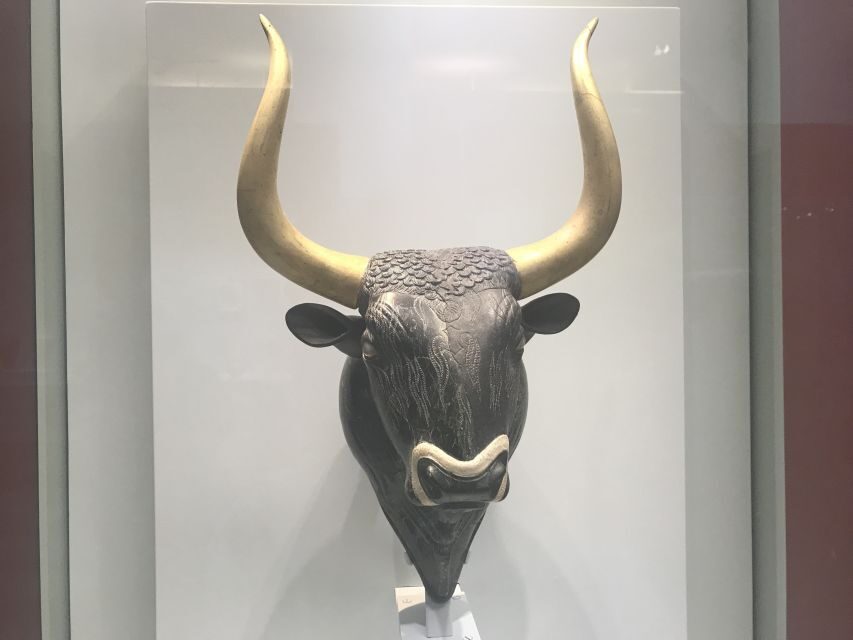
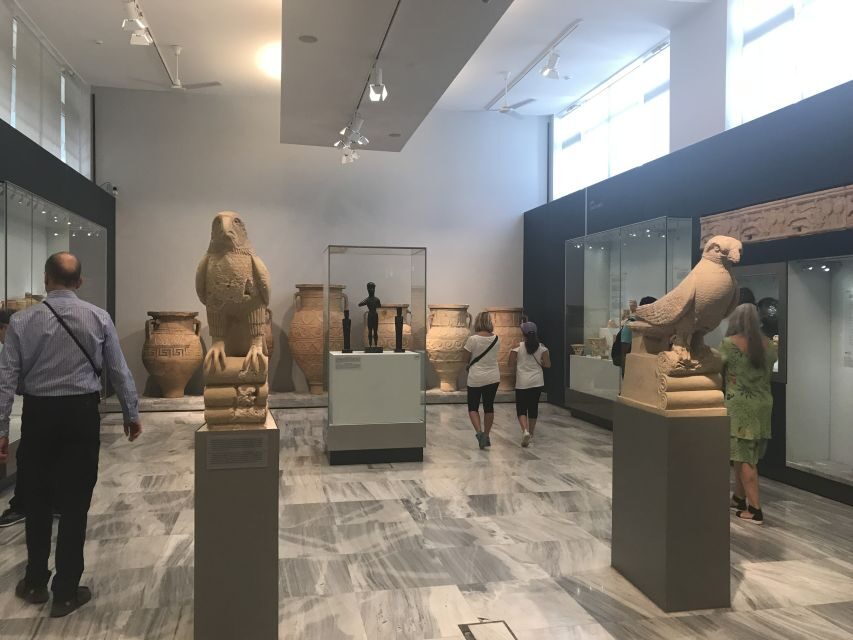
If you like museums, this one hits a sweet spot: it’s big enough to satisfy serious history fans, yet a guided walk keeps it from becoming a self-guided wander-fest. The Archaeological Museum of Heraklion is one of the most important places in Europe for understanding the Minoan world, and the tour is built to turn all that material into an understandable story.
What I really like about going with a guide here is that the Minoans aren’t treated like a single, distant “Bronze Age culture.” You’re guided through how people lived—daily work, religion, architecture, travel, and the arts—so the objects start to feel like evidence of real humans, not just artifacts behind glass.
The second thing I like is the match between the museum and the message. The building was designed to echo Minoan marble revetment through its colors and materials, so you get atmosphere before you even reach the galleries.
The only drawback is the time. At 1.5 hours (about 90 minutes), you’ll see a carefully selected path. If you’re the type who reads every label and wants to linger, you’ll want to budget extra unstructured time afterward.
Other walking tours we've reviewed in Heraklion


Why the museum building feels like part of the experience
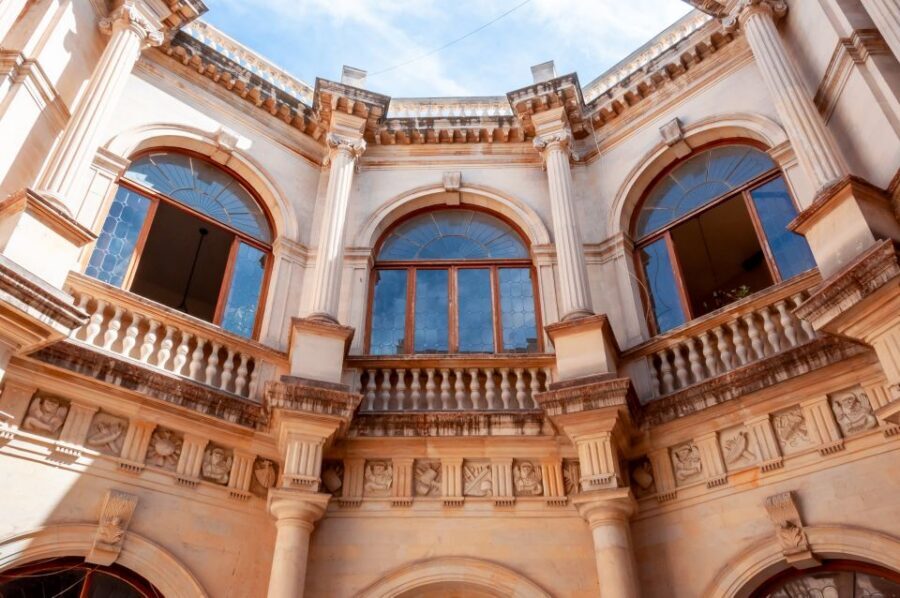
This museum is not just a box for artifacts. The structure itself is a highlight. It was built between 1937 and 1940 by architect Patroklos Karantinos, and it sits on a site that was previously occupied by the Roman Catholic monastery of Saint Francis, which was destroyed by an earthquake in 1856.
The building is described as antiseismic modernist architecture and was awarded a Bauhaus commendation. That matters because it changes the tone of your visit. Instead of a purely historic shell, you get a 20th-century design that borrows from Minoan visual cues. The colors and materials—like veined polychrome marbles—are meant to recall Minoan wall paintings that imitate marble revetment.
There are 27 galleries across two stories, plus an audio-visual gallery, modern laboratories, a cloakroom, a cafeteria, and a museum shop. In other words: even if you only do the guided section, the building gives you a reason to stay longer. And if you do have extra time after the tour, you’ll know where to find practical options (coffee, restrooms, and shopping for books or postcards).
The 90-minute guided walk: what you’ll actually do
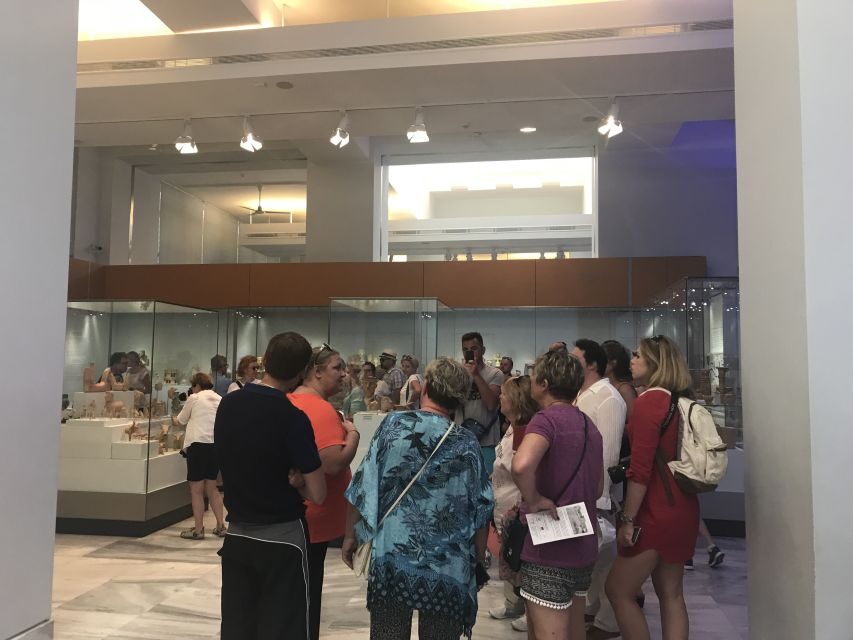
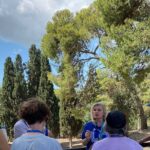
This tour is essentially a focused walking route through the museum’s key areas. You’ll follow your licensed guide through the galleries on an English-language small-group experience.
The pacing is important. The museum’s story stretches across about 5,000 years, from the Neolithic to the Roman era. Without help, that range can feel like a pile of impressive items. With a guide, you get a timeline thread—what changes over centuries, what stays recognizable, and what makes the Minoan period so distinctive.
You should expect the guide to do three jobs at once:
- Set the context for what you’re looking at (so it doesn’t feel random)
- Point out the major pieces so you don’t miss the museum’s most meaningful examples
- Explain how the art connects to daily life, not just kings and legends
If you end up with a guide like Akviti or Akrivi (names seen in earlier bookings), you’re likely to get a mix of crisp facts and a bit of personality. One guide experience stood out for being especially engaging and funny, and another for keeping the historical framing up to date.
The heart of it: Minoan culture and why it matters
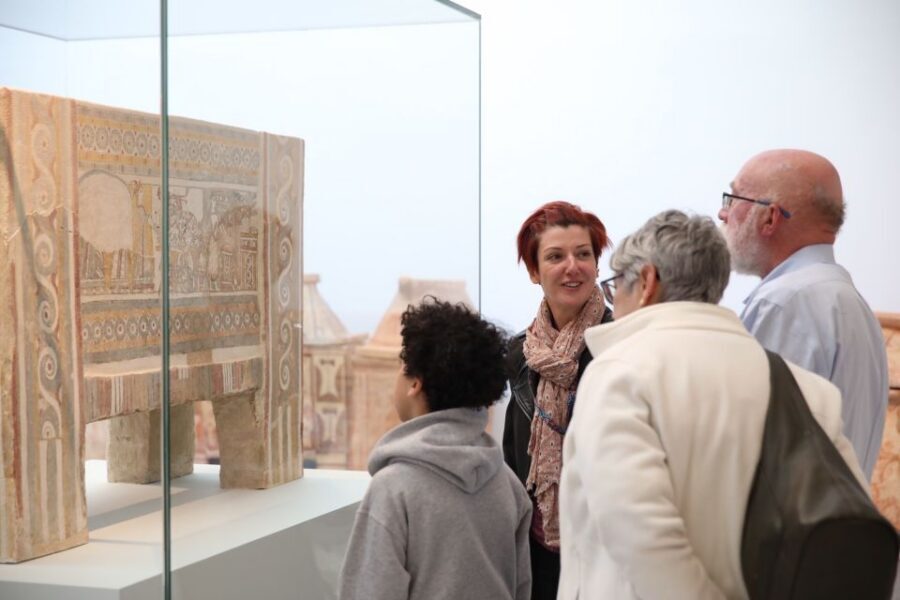
The Minoan civilization is the star of this museum, and the tour is designed around that reality. The museum is repeatedly described as the place for Minoan culture in a way that’s hard to match—often treated as a top destination for Minoan art and archaeology.
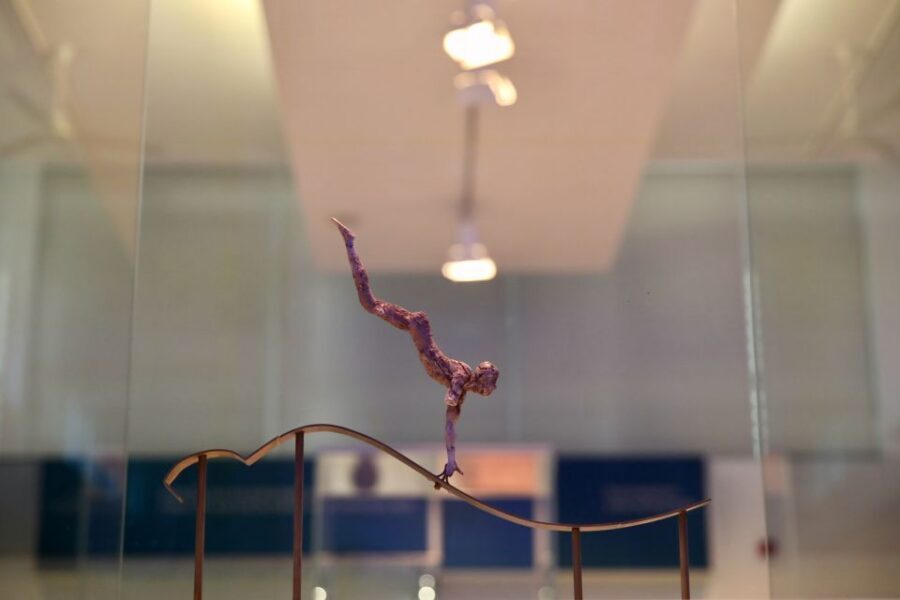
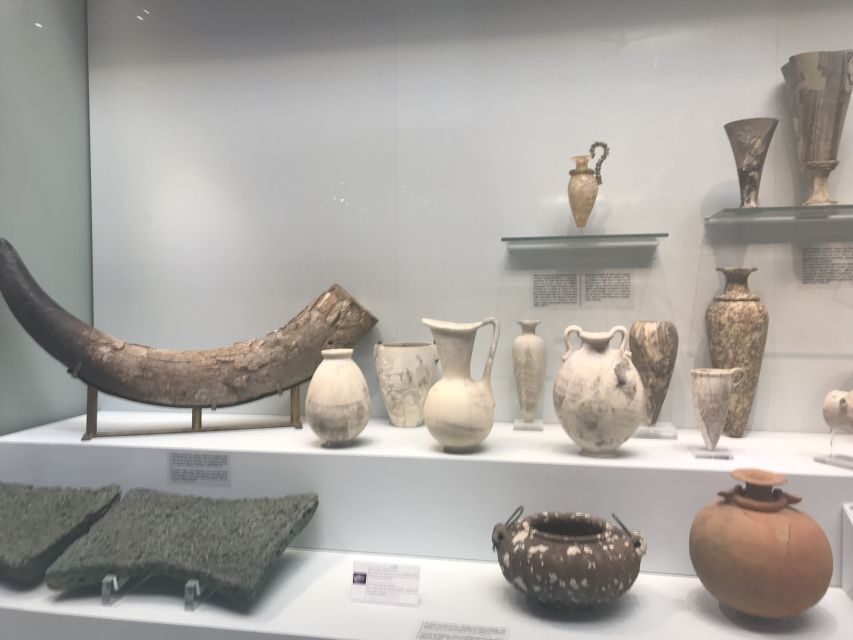
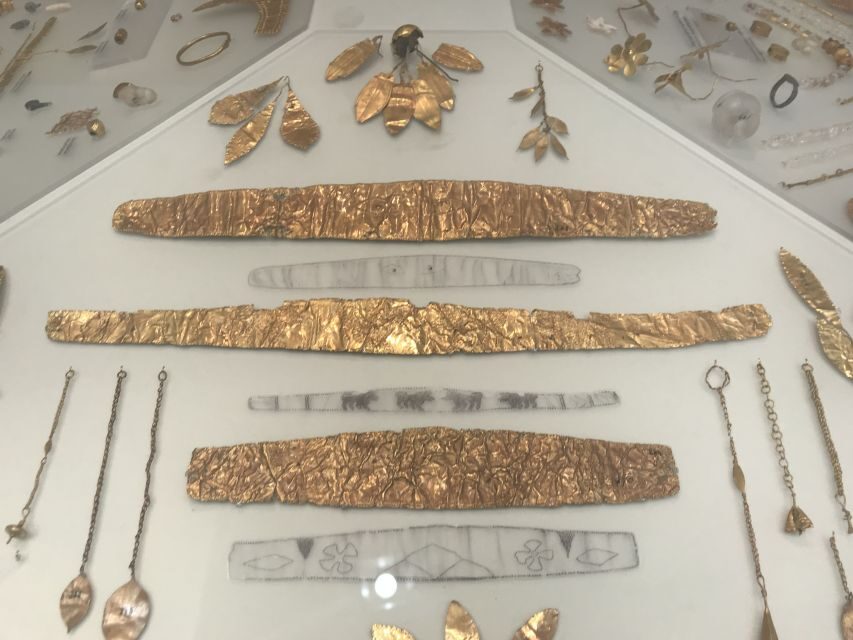
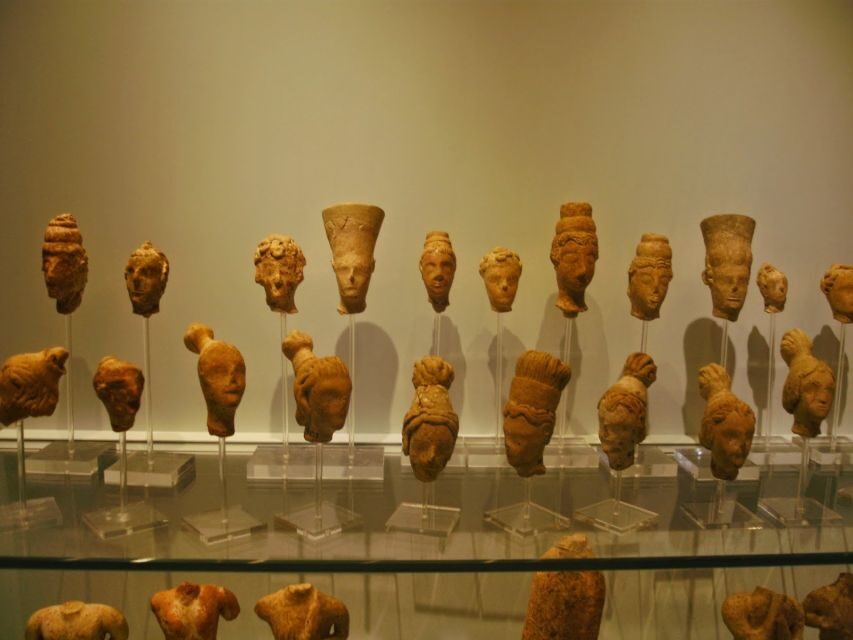
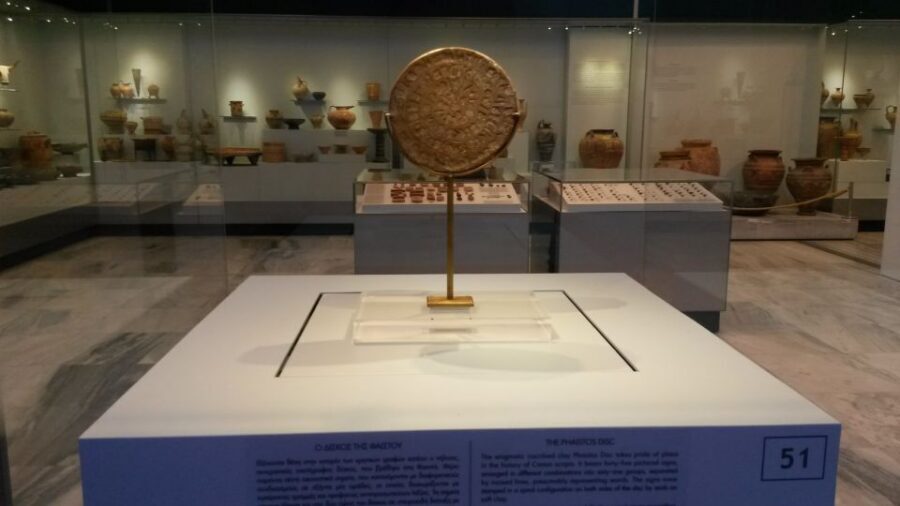
Here’s the practical takeaway: the Minoans show up through many kinds of objects—artwork, everyday-life evidence, and clues about belief systems. Your guide’s job is to help you connect those dots. When you see a collection of decorative pieces and ceremonial items, it’s easy to think of them as just beautiful. The best guided experience helps you understand what those styles suggest about society: status, trade connections, religious practice, and cultural identity.
This is also where you’ll start noticing patterns. The Minoans are often discussed as Europe’s first advanced civilization, thriving in Bronze Age Crete. A guided tour helps you translate that big claim into something concrete: how people built, what they valued, and how their artistic style worked as communication across time.
And because the museum covers multiple eras beyond the Minoans—Neolithic to Roman—you’ll also see how later periods relate to earlier traditions. That contrast is one of the reasons a guided route is so useful. It keeps your brain organized while you’re surrounded by centuries.
Architecture meets archaeology: a smart two-for-one stop
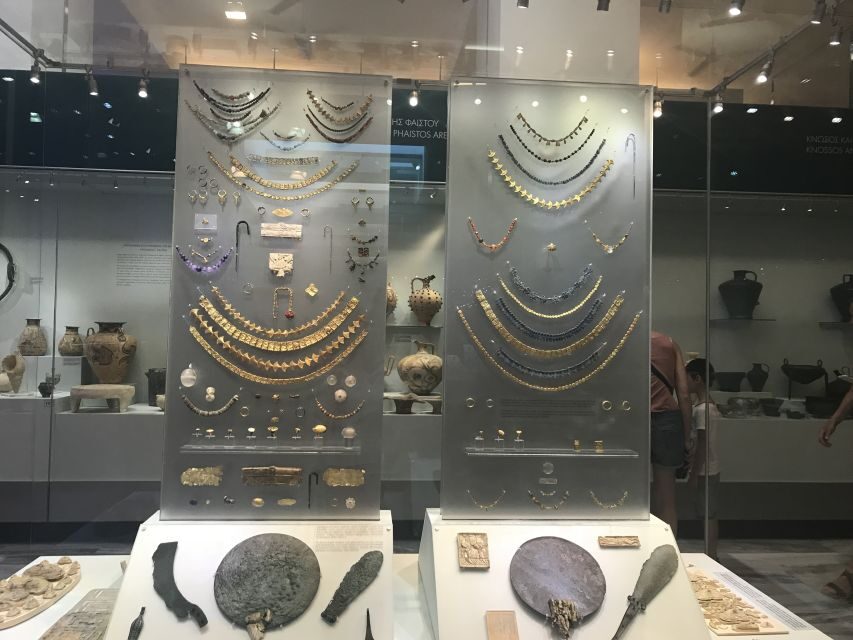
If you’re the type who likes museums but hates feeling like you’re only looking at display cases, this stop has extra mileage. The building’s design echoes Minoan visual language, so your visit isn’t only about what’s inside—it’s also about what kind of space holds it.
You’re walking through a modernist, antiseismic building with a Bauhaus nod, then moving into galleries that present material from one of Europe’s earliest major civilizations. That mix can feel surprisingly logical: it shows how modern people keep reinterpreting ancient life.
It also gives you an easy rhythm. Take a moment outside or in the first gallery areas to notice the building textures and colors, then move into the exhibits with a more receptive mindset. It’s a small thing, but it changes how the whole museum “reads.”
Other guided tours in Heraklion


What to bring and what to plan around
This is a straightforward museum visit, but a few details can make it smoother.
Bring:
- Your passport or ID card (important for reduced tickets if you qualify)
- Comfortable shoes (you’ll be walking inside the museum)
- A camera (and you’ll likely want it)
Don’t bring:
- Pets
- Luggage or large bags
The tour includes entry ticket access, but you’ll still want to be ready with the right payment approach for the ticket setup. The standard adult museum ticket is listed as €12 (with a reduced option of €6). The tour includes entry ticket in the tour price plan, but the requirement to bring money for the museum ticket is still flagged in the visit info you should take seriously.
Timing, pairing with Knossos, and beating the heat
One smart strategy that comes up again and again for people visiting Heraklion area sites is sequencing. If you’re doing Knossos and the museum on the same day, consider tackling Knossos early. Later in the day can mean more heat, and a museum visit—while indoor—still requires a lot of walking and attention.
The guided museum format also helps you avoid the common mistake of treating the museum like a slow stroll. A clear schedule beats decision fatigue. You’ll see the key material efficiently, then you can choose what to revisit on your own.
Price and value: what you’re really paying for
The price is $147 per person for the 1.5-hour experience. That number can feel high at first glance—until you break down what’s included.
You’re getting:
- A licensed guide
- A small-group English tour (limited to 10 participants)
- Museum entry ticket included in the package
So you’re paying primarily for interpretation and efficiency, not just access. In a museum this important, a guide can be the difference between accidentally skipping the most significant works and actually understanding what you’re looking at. You’re also buying time-savings: the tour is designed for a focused route.
If you’re traveling solo or you don’t want to spend time figuring out the best way to move through 27 galleries, this becomes a more logical value. If you love self-guided slow museum days and you already know what you want to see, you might spend less on a ticket only. But for most people, the guided format is what turns the museum from impressive to meaningful.
Who this guided museum tour is best for
This is a great match if you:
- Want a guided introduction to Minoan culture without getting buried in details
- Prefer small groups and a real human explanation
- Are pairing Heraklion sights and need an efficient, well-timed museum block
- Like museums but also want someone to help prioritize what matters most
It also works well for families, based on guide experiences that highlighted handling children with energy while still delivering real information.
It may be less ideal if you’re the type who needs 3–4 hours minimum in a museum to truly absorb everything, because the guided section is short.
Should you book this tour?
I’d book it if you want the most value from limited time in Heraklion. The museum is huge and the subject spans thousands of years, so a guide gives you structure fast. The added plus is the building itself: walking through a modernist, Bauhaus-recognized structure that visually echoes Minoan materials makes the whole visit more memorable.
If your priorities are only absolute “see everything” freedom, you might skip the guide and do it at your own pace. But if you want a confident route, meaningful context, and a small-group experience in English, this guided tour is a strong choice.
FAQ
FAQ
How long is the guided tour?
It lasts about 1.5 hours (approximately 90 minutes).
Where do I meet the guide?
Meet at the entrance of the Archaeological Museum of Heraklion. Look for the Meeting Point sign that says WeGuide.
Is the museum entry ticket included?
Yes. The entry ticket is included (with the adult ticket listed as €12 and reduced as €6).
What language is the tour offered in?
The guided tour is in English.
Is the tour wheelchair accessible, and how big is the group?
It is wheelchair accessible, and the tour is a small group limited to 10 participants.
What should I bring, and are pets allowed?
Bring your passport or ID card, comfortable shoes, and a camera. Pets are not allowed, and luggage or large bags are not allowed.